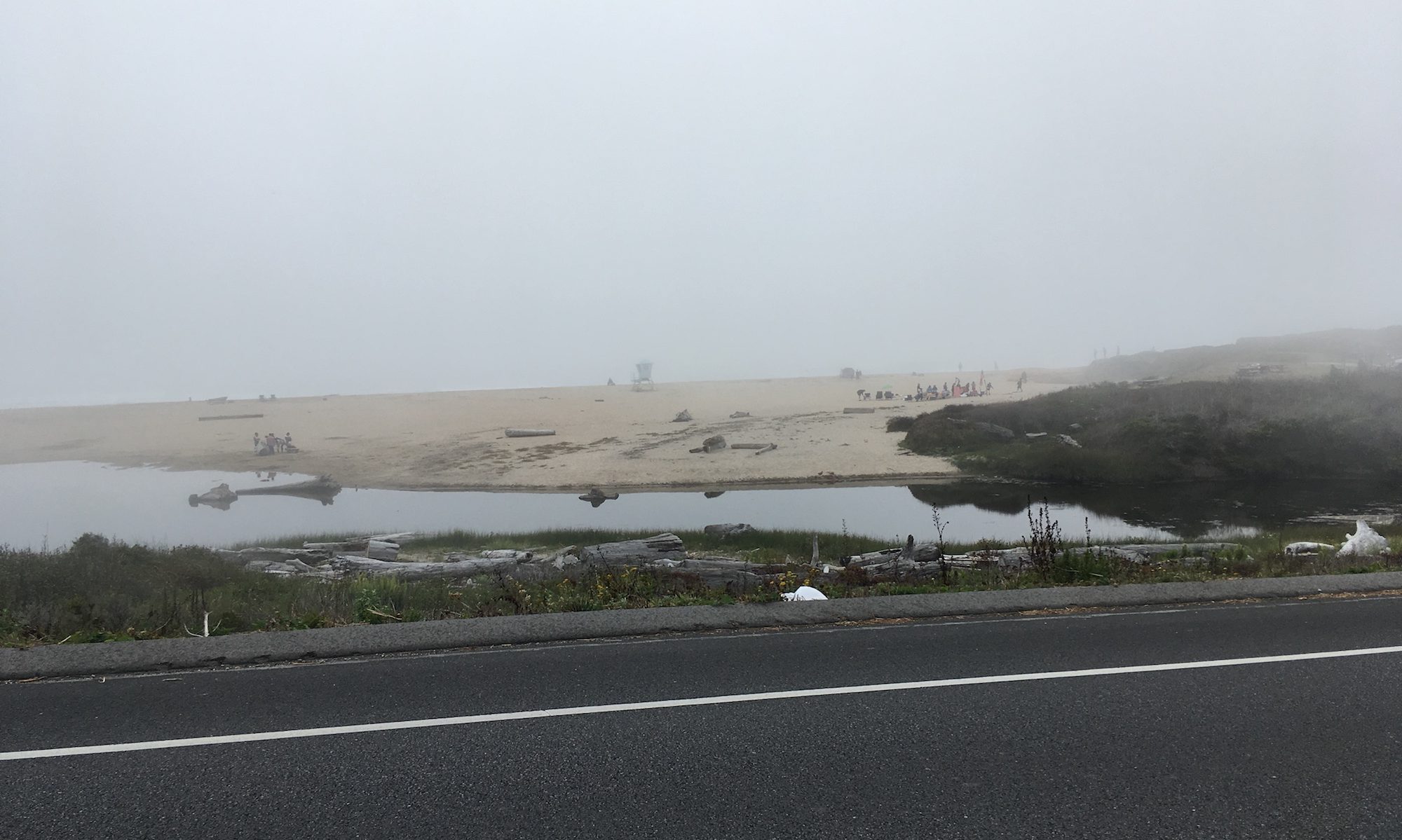
plinka plink plink 2022

One of the unexpected bonus delights of London was when the static sound in my left AirPod was untenable, and I booked a quick Genius Bar visit at the flagship Apple Store in Covent Garden to see if anything could be done. Remarkably, thanks to the extended service program for the known issues with noise cancelling, I walked out with brand new AirPods Pro for both ears (albeit in the original case, which is fine) and probably spared myself having to think about new headphones of any kind for at least a year and probably two. As souvenirs of London go, it was right up there with the new brogued Chelsea boots for pricey yet delightful.

Problem is, the earbuds were the least of my problems. I don’t know what the issue was – EE coverage? Forgetting to go into Airplane Mode in the Tube? Citymapper or Maps hitting the battery harder than six hours of podcast and music a day at home? – but the battery life on my iPhone 12 mini was untenable. I was plugging into a fast battery every day around 3 PM, especially given that my wireless-charge magnetic Anker battery couldn’t charge fast enough to keep the battery from dropping (a wild disappointment). And even though there were battery issues introduced in iOS 15.4, which dropped halfway through the trip, I upgraded on the fly in hopes that it would fix the problems I’d already had for the entire Park Lane leg of the voyage.

I’ve already been into the Genius Bar since I got back. Looking at the diagnostics, the battery is on 85% of its original capacity (it’s not eligible for warranty replacement unless it drops below 80% before AppleCare expires in November, which could go either way at this point), and there are no other indications in the GSX diagnostics that would rate a repair. And let’s be honest, it’s not that big a deal in a world where I’m still working from home, and the phone can sit on a wireless charge pad next to my workspace or on the wireless charge pad in the ID.4 or on the wireless charger overnight. And who knows, maybe iOS 15.4.1 will actually make a little difference.

So what to do about the phone, then? If we were going to cocoon forever, no big deal. If I were to go back to commuting, especially on transit, something would have to give. And if I were seriously traveling…

Hold up.

I do have a serious trip coming in May. It’ll be the first time back in the old country in six and a half years (and for good reason; the Confederacy didn’t feel like a safe place to visit in the Tr*mp era, and I’m white) and there will be more than a little gallivanting around Tennessee and Alabama. It probably won’t mean as much use of location services – they don’t have transit in the South and I know my way around the freeways, and we’ll be in the company of others for most of the unfamiliar spaces – but there’s likely to be a lot of photography and probably more than a little photo casting up to the TV screen at some point. The move between now and then, most likely, is to evaluate whether the magnetic battery booster pack is viable in a world where GPS and EE’s ratchet 4G signal isn’t sapping your power.

So assume I can make it down and back as is. Then…well, there are decisions to make. The iPhone 12 mini I have now, for all its issues, is still worth the maximum $320 in trade-in value. The iPhone 13 mini is the last of its kind for the foreseeable future; the Great Mentioner is assured that the fall line will be an iPhone 14, iPhone 14 Pro, iPhone 14 Pro Max, and a new iPhone 14 Max, replacing a 5.4” phone with a 6.7” phone and ensuring for the first time that you won’t be able to buy a current-processor iPhone smaller than six inches.  (Unless the non-Pro 14 line stays with the previous processor, as has been rumored, meaning that the SE3 will be the small phone…but I am not about to give up Night Mode and go down from 5.4” to 4.7”.) 

So the question is…the iPhone 12 and mini remained on sale after the 13 and mini dropped. It’s possible the 13 mini will remain on sale after autumn, and at a $100 price reduction just as the 12 mini was. Problem is, the trade-in value of my 12 mini will certainly also drop, and I’m prepared to bet by more than $100. It feels like gambling a bird in the hand against a slightly different bird that may or may not be in the bush.

But what’s the benefit of this upgrade? Wasn’t the 12 mini supposed to be the long-term phone? Yes, yes it was. But the 13 mini feels like the last call for one-handed premium phones. It would be a little faster, a little better camera, a little more future-proof (or at least future-resistant), and most of all, it’s already going to cost me $69 to replace the battery under AppleCare before November. A new 13 mini out of box would represent a 30% jump in battery life over my existing device as is, not to mention a reset of the warranty clock to summer 2024 and an extension of viability to possibly 2026 or later. After all, if not for work providing the X and my unwillingness to carry two phones, I would have hauled the original SE until spring of 2020 at a minimum.

There was one other consideration – at one point, I thought there would be no point in shifting phones until after I’d changed jobs, and could make a simpler fist of migrating to a new work MDM and new set of requirements and yadda yadda, whatever. Problem is, after half a dozen attempts in the last six months, it’s become clear that I’m not going anywhere for the time being, which means that moving phones means having to jump through a bunch of hoops to make sure I don’t screw up the 2FA and MDM and everything else I need for work, and at a time when a lot of that stuff is all over the place at the office. I’m wary of doing anything that calls attention to the fact and possibly puts me on a new work phone – and worse, a new phone from my actual employer, which would almost certainly mean winding up carrying two phones because of all the restrictions. Which would be insane and frustrating and reason enough to quit almost by itself.

I don’t know. In a lot of ways, it feels like moving to the 13 mini is paying $400 out of pocket to guarantee that I can carry on for longer with a satisfactory phone. And having to pay again just to run in place and keep what you have feels awfully on the nose for 21st century American life. And yet, if you don’t pay, you’re still going to have to pay for a battery replacement and possibly new front glass anyway before the warranty expires and drives the cost even higher when you inevitably do have to buy a new phone in a few years.

First World problems of the worst sort, I know. But it kind of says a lot about how we live now.

lessons learned

The first big thing I took away from this trip is that it’s time to give up and quit trying to wish a better social media realm into existence. It’s not going to happen, and I can mostly get by with what I have carved out, which is mostly as follows:

1) Twitter, locked and limited to people I actually know, with controls on who can retweet stuff into my feed, and only accessed through Tweetbot so that I get a chronological feed with no ads. (And then a secondary account to follow the sports teams and brands and entities I want, with no expectation of being particularly interactive.)

2) Instagram, but only via the website and only via the iPad. That doesn’t work perfectly, but it does spare me the ads and the endless scroll of stuff I didn’t want to see, and having to get at it through the iPad limits the amount you can perseverate somewhat especially if you aren’t posting at vacation volume.

3) Signal, the only cross platform messaging tool worth mentioning. We got a couple more friends onto it this trip, and it remains my best way of messaging the people who are otherwise on no social media at all to share our happenings. If Signal would implement something like Stories, I might be done altogether, but nobody on WhatsApp ever looked at them and I was not sorry to dump WhatsApp altogether. It also occurs to me that if Signal would let you send to multiple group chats at once, that would be useful (and get a lot of the old Venn functionality, even though the notifications would be batshit after a while) but I suspect the encryption requirements would make that untenable.

4) Slack, where a small knot of daily-chat internet friends carries on as we always used to in the MUSH in days gone by.

And that’s pretty much it. There are a couple of other group chats that are redundant subgroups of the above, but by and large, that’s it and that’s all. No Meta apps on my phone, no means for posts I didn’t ask for to be injected into my flow. Everything I want to see, and for the most part, nothing I don’t. And almost entirely self-contained in the phone, at that. It’s not much, but it’s enough to make me feel like I mostly have other people I can interact with in a world that has conspired to put most of them in other counties or other states or sometimes other countries.

Four apps. Which is a shame. Flickr, the ur-app for phone and photo, isn’t a viable alternative. The rash of Path-like apps like Peach or Cocoon never got traction. micro.blog, though standards-based and interesting, was ultimately more public than you want from social networking. HelloApp, which is basically non-Meta WhatsApp with a feed, is dead on the launchpad. Even attempts to do something with iCloud Photo Sharing never got traction with more than a couple of people. The above four apps are basically all there is for me, because they’re the minimum necessary to circle up all the people I want to communicate things to in a casual manner on vacation, with varying degrees of success. Until Apple finally deploys the mythical PalAbout or something like it, and everyone adopts it, we’re kind of stuck.

Whatever. Sorted. (Well, that and that my phone battery is a tragedy, but more on that eventually.) So next up: pub life. The first problem, and one there is no evading, is that I have moved to a place that does not believe in transit. Hauling out the old reliable Citymapper app, it would be almost as quick for me to walk to the pubs of my former frequency on Murphy Street than to try to take transit there. Which means the pubs I hoped would be my regular stop are now going to be a drive, as are the pubs of downtown San Jose.

Except…

If everything is a drive, then that changes things. For one, the proximity of the closest downtown is not appreciably different from the next-closest downtown, and that means I can be driven to and from one as easily as another. More to the point, it means that a certain pub that was never on the radar before is suddenly as drivable as anywhere else, and has the not-inconsequential advantage of being an actual English pub that was built in Sussex, disassembled and shipped to Cupertino in 1983. In my latter days at Apple, I was prone to walk over at lunchtime for potato skins and a pint of Guinness, so it’s not like I don’t have a past there, and it is also open from 4 PM to 10 PM every day – making it available on Sunday evenings in a way that my previous best pub no longer is. 

Problem is, I’m ultimately going to need something like Lyft. (Uber is right out, though Lyft is hardly better especially after their Prop 22 bullshit.) There’s an app called Alto that looks like it’s trying to be a more posh version of either, but I’m not interested in ponying up for a membership and to use it on on one-off basis looks unreliable and pricey. Ultimately, having three pints on a Sunday evening is going to involve troubling someone to pick me up (and drive me there in the first place, most likely). Which means the pub may still have to be something that happens mostly at home, with maybe a monthly indulgence in travel and whatnot. But being upstairs in a reasonably posh public house and mostly having the place to myself of an evening – well, it was a dream come true on a day when I desperately needed it.

Something was different this time. I know I was looking at a lot of pubs in 2016, but nothing like this. I’m more conscious of where things are, partly because of Citymapper for three weeks but also because Watched Walker is reinforcing it. And I’ve dreamed of London every night since we landed back in the states, which is something that’s never happened on any trip. Brick and stone and cobbled streets and narrow alleys and Tube line routes, all the things of my imagination. There’s nothing like it out here, largely because anything with that much brick either crumbled or burned in 1906 – maybe in Boston, or in Manhattan south of Houston, or Old Town Alexandria. All the more reason to consider domestic travel again.

OK, what else? Well, one thing that struck me repeatedly in a number of places is how much money Disney spends to try to create the kind of vibe those spots had built themselves over a century or more. And that immersive Disneyland feel is something I want more of in my life – whether it means the new tiki bar in San Jose, or the old speakeasy in San Francisco, or just the pub experience of the Duke of Edinburgh, I need that place-feel to help escape every bit as much as in Black Spire Outpost. So up next on the list is “where else can make me feel like I’m genuinely Somewhere Else?” And I have a small but growing list, part of which includes downtown Santa Cruz – but I also have car exploration on the radar again. Just as we were able to explore from the front of the top of the bus, it occurs to me that our shiny new electric crossover is the perfect instrument for going out and seeing other parts of the South Bay in safety and comfort without exerting myself too much on the scouting trips. Sure, the old practice of riding around for Washington games is basically dead, but before it turned into a coastal drive every time, it involved driving just wherever. No reason I couldn’t put on an appropriate stream or playlist in the ID.4 and just try to cruise it out a little.

In the end, the big revelation of this trip is that there is a wider world to venture into and explore from the other side of the last two years. Is it over? Nope. Is it “back to normal”? Can’t be. But it is whatever it is now, and it’s time to figure out what that looks like. And if I can stay in travel spirit here, maybe I feel better here, and maybe things start looking up.

Maybe.

more stray thoughts from W1 to N1

The Park Lane had this pleasant citrusy smell in the lobby, and the Palm Court always had a weird blend of Aloft-ish music, AM-era soul, and gypsy jazz playing overhead. It made for an atmosphere more suited to a G&T than a pint, which I guess is rather the point of a posh Mayfair hotel from the Bright Young Things era. The club room access – which made for free breakfast, more than one grazing dinner and a steady supply of fizzy lemonade and blackcurrant jelly babies – didn’t hurt either. Leaving there felt a lot like the vacation was over – it meant leaving Shepherd Market behind, but it also shifted into a slightly more urgent phase of things where it was important to make sure nothing important got missed.

Speaking of missed, we spent maybe two hours at the British Museum, and blew off the V&A altogether. I think what we found is that we were overwhelmed with the volume of things we were only marginally interested in, and that slow museum-trudge is hell on your back (and my shoulder) after a while. I think it was the right move – what we wanted was to see the city. We spent a lot of time in the front seat of the top of a bus, rather than on the Tube or actually walking, and that worked out well enough that I didn’t feel the need to walk down the King’s Road on foot. What stands out in retrospect was how many things we didn’t revisit – I mean, we were always going back to Borough Market, but we never set foot in the Shard. We didn’t circle back to Gibbons’ Rent or Camden Market or the Transport or Canal Museums or go to any West End shows or football matches. We mostly went out to be around things we hadn’t been near before, with the aim of seeing all we could see, and for the most part it worked well.

The Park Lane feels like home, too. I meant it when I said that every time I step out the door onto Piccadilly and turn left felt like the first day of the honeymoon all over again. “Shout to the Top” tends to come on in the AirPods all by itself, and you’re on the right side of the road for a cab or bus straight into the heart of the West End. (And a good thing too, because the slope up to the Green Park tube station is a lot steeper at 50 than it was at 33.) We were there with my mother in 2010 as well, and there aren’t a lot of non-Disney hotels outside San Francisco I can say I’ve stayed at three times. I don’t regret staying at the St Pancras, the creepy paintings in the hallway aside, and I’d sure liked to have been closer than the furthest room down the hall so we didn’t start every day using up a quarter mile of walking – but it’s not something I feel the need to repeat, whereas the Park Lane just feels special in a way that makes me hope we can stay there again in autumn 2027 or whenever we inevitably return.

It also felt good to go out and do things with people. We had a couple of dinner gatherings, but we also went out to pubs twice with friends, once for a roast and once just to be out and about – which ended up with a trip to Popeye’s and a return trip on high speed rail. To be out with my boot heels on foreign cobbles in the company of friends is something we haven’t had since Ireland, and it filled a hole in my reality that was so much bigger than I thought – after sheltering and cocooning long enough, you can almost convince yourself that you’re content with your own company until you realize there’s an alternative. Hopefully we get to make more of it now.

And there were minor things, too, but no less valuable for having them. I was able to actually make conversation in a pub a couple of times (ok, one was technically a craft beer bar, details details). I was able to visit Oxford without being consumed by regrets and angst about The College Thing, which means maybe the distance and the therapy are finally paying dividends. I got the closest straight-razor shave of my life, which put me on notice that such might be a replicable indulgence here, and the one bad day I had was fixed with a quiet Saturday night upstairs in a Mayfair pub with red flocked wallpaper – which makes me think that it’s about time I gave the Duke of Edinburgh another chance of a Sunday night, of which. 

I think the biggest and most precious thing was: I stayed punched out. I didn’t perseverate on work, or politics (US domestic, anyway), or the backlog of things that have to get done here, or the looming drama and trauma in Alabama in May. It would have been so easy to get consumed by other stuff, which I think is no small part of why the heat took me out entirely in 2016. For the first time since the first time, I got to visit London with my sweetie and no sword of Damocles in sight, And the desired result was obtained, handily.

So now the thing to do is start planning for the next thing. Sometime in 2023, hopefully, it’ll be time to go somewhere else again, and I’d be lying if I said I didn’t have two or three thoughts on the boil already.


Life in London

It was meant to simulate living there. Three weeks in London and no other travel (apart from the occasional side jaunt for the day to Oxford or Windsor). No obviously touristy plans – no Tower, no bus tour, no London Eye. Just a list of things we’d like to do accumulated over the last six years with an eye toward the day we’d finally get back, when we could use two years of accumulated credit card points and PTO to emulate life abroad.

The nice thing about staying in the Park Lane for the third time was that it meant close proximity to Shepherd Market, that tiny urban village down an alleyway and around a corner. Like some mystical portal, going around the curve of White Horse Street suddenly opens onto a courtyard with a couple of pubs, a couple of restaurants, a news stand, a pharmacy, a barber shop, and narrow streets to other shops and eateries. It was convenient, it was cozy, and – along with Ye Mitre in Holborn – it reinforced how much I like an alley and an interior courtyard with back-alley shops and pubs.

More than in years past – especially post-Brexit – the experience of London felt as if the British Empire had colonized the world, and in exchange, the world colonized London. It felt like the Bay Area, but different – less East Asian, more African and Muslim – but definitely felt like a world city. London is definitely a city-state the way California is a nation-state: something old, unique, separate from England or the UK. And I found that the older it was, the more I liked it – especially in pubs like the George or the Anchor or Ye Olde Cheddar Cheese or The Prospect Of Whitby, places that were serving ale before there was an English-speaking colony in North America, (But the resulting phenomenon of the toilets always being upstairs or downstairs in a stairway the width of an iPad makes me wonder how more people don’t break their necks.)

Actually maybe they don’t because every pub had two or three cask ales that were under 4.0% ABV. And because every pub serves halves which work out to about 9.5 ounces. I ended up celebrating my 50th birthday by having 50 different new beers I’d never had before, most of which were cask ales. If I can find 3.8% session IPAs like Ballast Point’s old Even Keel, that’s more or less what’s on offer, and I’m grateful for it because it means you can have a leisurely pint or a cheeky half most anytime without having to worry that you’re going to get completely hammerjacked. And you can tap to pay, too – you can tap to pay anywhere, seems like. The UK’s COVID response included a mass move to touchless NFC payments and self-checkout – even more than in the Bay Area.

So what am I bringing back this time? I’d love to bring back London cabs, which remain the world’s finest (even if the new electric ones only have a 60 mile range) or a pub in walking distance of anywhere you are (I might have to revisit the ostensible pubs in San Jose, now that most of the restrictions seem to be lifted). But what did I discover or learn about myself this trip that will enhance my life on the return?

For once, I’m going to ask for sparking water more often. More than any previous trip, I felt acutely the small size and lack of ice in most soft drink servings. How can they serve an Imperial pint of ale and a thimble of literally everything else? But sparkling water – especially with the house water filter in place – might be the hydration strategy this summer. Having the new ID4 is also a nice bring-back; the ID3 was surprisingly present, one for every two Teslas we saw, and while it took a year and a half for me to get my hatchback after 2005, this time I have the Euro-vehicle waiting in the driveway already.

There’s other stuff here already, too. Transit payment with the phone (my Clipper card is already installed even if the passes can’t be). There are new game shows of interest which are already available in BritBox, meaning we have new comfort-food content to pass a cozy evening. There were unexpectedly immersive settings like Mr. Fogg’s which can, in their way, be replicated locally (the new Dr. Funk’s, perhaps).

But most of all, London had already arrived in the new normal. You still have to be wary, and plenty of folks still wore masks on transit (as we did), but it was possible to while away a quiet evening upstairs in the pub. Or meet up with friends we hadn’t seen in six years and enjoy a dinner party or an afternoon by the river. California did its part for two years and is coming to equilibrium, and maybe just being able to go into the wider world again will mean enough.

And three weeks of detachment from the trauma of the real might be enough to reset the clock for a while. Your wounds can’t heal until the knife is pulled out, and for three weeks, the knife didn’t exist. That was a real and tangible blessing. Being allowed to catch my breath and enjoy life with my sweetie was as good a way of beginning my 50s as i could have hoped for. Fingers crossed we can keep the momentum.

halfway home

The first time I was in London was my honeymoon. Four nights in the Park Lane (the groom’s mother apparently pays for the honeymoon with Starwood points) en route to the Cotswold, Bath and Edinburgh. After a few months of Virgin Radio at work, it was astounding, all of it: the Tube, the double decker buses, the London Eye, the wild array of cell phones in the shops, the West End – and way too much time spent in the easyInternet cafe posting about it in the pre-smartphone era.

The second time I was in London was 2007, and it reflected its era as much as the honeymoon did: a scattered trip with Paris, Oxford and York excursions built in, tiny hotel rooms in the streets behind Victoria station, an iPhone with no service and at the mercy of Wi-Fi that was not the least bit pervasive, and a general bewilderment matching the chaos of having guessed wrong and left Apple.

The third trip, in 2010, the world was better…but I was towing relations through the same stuff I’d already seen, for the most part. And I still couldn’t unlock an iPhone 3G, which was an impediment (as was the shite camera) so I was carrying two devices, neither of which was particularly useful most of the time. Lot of ducking into Pret to get mail and Tweets and download more music.

The fourth trip was 2016. It was a little over a week, and probably should have been for longer. It was right after the Brexit vote, so the world had already started going to Hell – which you could tell because the high temperatures were 90 degrees and up on almost every day. It was the first trip where I was actively seeking out pubs, the patrons of which were unfailingly gathered outside for want of air conditioning. This time we were in a cozy boutique hotel by Kings Cross, and there was a real sense that something had shifted because we flew over international business class and stayed in this nice accommodation on our own credit card points.

And now here we are. Halfway through three weeks in London (apart from a day trip to Oxford for a chartered private boat cruise). Our world isn’t exactly better, and it my not get better, but it has reached equilibrium in a way worth celebrating – and worth not deferring, because who knows what could happen. Tomorrow is not promised to you, and if you’re sat on the thin edge of the Third World War, best you should do so on vacation and using up those intangible points that you accumulated through two years of a pandemic.

Two years. Two years of Watched Walker on YouTube, the getaway we couldn’t have, dreaming of these same streets we are walking now – not particularly quickly, and not all the same, as as often as not we’re in the front of the top of a London bus taking in the scenery. I did have one day where I hit ten pubs and drank thirteen different beers, but it wasn’t as enjoyable as one evening and two pints in the upstairs of the Rose & Crown around the corner.

I’ve enjoyed it here, in this 20s and 30s Bright Young Things hotel for the third time but the first under our own steam. Everyone has been very nice, and while the war in Ukraine looms over everything, I haven’t had to think about Jamf deployments or job hunting or American political bullshit or my relations in Alabama or my mortgage in California or whether the damn charger is finally installed for the ID.4 or what is sufficient dress for an overnight restroom visit. We are in Mirror World, with its heavy plugs and its heavy coins, a place where everyone except street beggars has switched over to touch-free cashless payment (and the spectacle of at least one pub that would not accept cash at all, astoundingly).

I’ll miss walking around the corner in the morning, heading down White Horse Lane until it bends out of sight, and finding myself in a tiny urban village with restaurants and shops and newsstands (and four pubs). I’ll miss that first step onto the sidewalk facing Piccadilly toward the Green Park underground station, which always feels like that first time in London renewed. But I have another ten days to go, in a different hotel with different objectives, and the prospect of a weekend abroad with friends. That – after the last two years inclusive and everything about them – is a dream far too long deferred.

half a life

Fifty is a strange age. You’re not old, exactly, but you’re far too old to think of yourself as young. Whatever you are at fifty, for better or worse, is probably what you’re going to be for the rest of your life. Your midlife crisis is past, hopefully. There are no more kids on the way, probably. You’re nowhere near retirement, but you’re too close to it to seriously consider chucking your entire career and becoming a baker or a poet or a travel blogger unless you somehow became independently wealthy in the first fifty years. Who you are now is who you are, and if you can’t live with that, it’s important to understand why – and whether you can actually do anything about it.

Ten doesn’t feel like much of a milestone, and I don’t remember it being one, either. Twenty means you’re not a teenager anymore, and I remember feeling some pangs and angst about that, but our society hangs too much on 16 and 18 and 21 for 20 to really have any traction. Thirty is the end of your millennial adultolescence, the age where you feel like you have to start being a grown-up, get married if you’re gonna, buy a house if you’re gonna, have kids if you’re gonna, get on with your life. Forty…well, as I said, forty is the age you have to stop pretending. And by fifty, life has started taking away some of what you’ve been given. You might be given more, but you’ll never have it all at once. Assuming you ever did.

I think in a lot of ways, I’ve spent too much of my last twenty-five years trying to reframe my first twenty-five into a better story without having to make anything up. Trying to will it into being a better past than it felt like at the time. Maybe part of turning fifty is just accepting it as it was, and maybe letting time file the sharp edges off what was at the time a pretty painful trudge. Then again…is a memory really a memory if you don’t share it with anyone else? If there is no one else who was there who can still affirm your memories, couldn’t you have just as easily made the whole thing up? Or just as easily make something up to replace it? 

It seems like the last decade hasn’t been as full as the one before – that despite adding two new continents and three more countries, despite finally getting the long-desired sysadmin job with options to work from home, there was a lot of drudgery and loss. And there was. But this is also when I remade my wardrobe with a capsule of things that weren’t in my life ten years ago. This is when I made the shift from gas to hybrid to electric. This is when I re-embraced the blazer and established that my most self-actualized state is a drink in one hand and a phone in the other, sat in the first class lounge getting ready to depart abroad. This is the decade I returned to glasses, for crying out loud, for the first time in a quarter-century.

Twenty-five years ago, my world more or less completely reset itself. Completely new career, in a completely new city, with almost no connection left to anyone from my past. My father dead a year later was just the icing on the cake. Now, at fifty, I find myself in a new house for the first time in sixteen years, in a new car that replaced one twenty-two years old, and…well, I’d love a different job, but that has been awfully tough to come by under the circumstances, and I probably won’t be making much of an effort until April.

Because we’re going away. Three weeks in London. None of you pricks come rob my house. This is our exit from two years of turbulence through a fantasy of stepping out of our lives for a bit and then back into whatever new equilibrium we have achieved. One week for my 50th, one week for hers, one week for a second honeymoon as we begin our new new life together. What else are you going to do with two years of accumulated unusable PTO and credit card points?

I need the hard reset. I need pub night writ large. I need to punch out of reality for a bit and see if I can get my head together before kicking off my sixth decade.

Let’s go for a ride.

maybe it’s the getting by that gets right underneath you

it’d swallow up your every step, boy, if it could

but maybe it’s the stuff it takes to get up in the morning

and put another day in, son

that keeps you standing where you should

so put another day in, son

and hold on till the getting’s good

a fugitive looks at fifty

The phone has replaced geography. I can look at five and a half inches of black glass in one hand and keep up perfectly with the ins and outs of UK politics, either from the BBC’s website or their podcasts or just Twitter snark. I can listen to Bluegrass Country from WAMU in DC, or the Midnight Jamboree from the Ernest Tubb Record Shop in Nashville, live on WSM, or stream a big-band station with the broadcast watt power of a hair dryer to anywhere I happen to be. A couple weeks ago, I watched the local ABC affiliate in Birmingham for four hours from my Silicon Valley living room, watching James Spann do what he’s done for forty years and marveling at how much has changed with the precision of tracking and the measures you’re meant to take when the tornado comes barreling through. I watched the Winter Olympics from Beijing via Hulu from a fire pit in South Lake Tahoe. I commiserated about idiots and morons in Ottawa with someone in Ottawa in real time. 

It’s not just the the phone is a camera and a television and a bookstore and a stereo and a GPS and everything else you can imagine all in one, it’s that it defies the geographical constraints of being in range of the broadcaster or in the distribution area of the newspaper or in the neighborhood of the bookstore or the record shop. It makes you post-geographical. It creates a layer of participation in the world that works from anywhere, as long as it depends on bits and not atoms.

Set against this, geography becomes more important than ever, because of the things that the phone cannot do for you. The phone can provide you the avenue for belonging, but if you live somewhere in which who you are as a person is wrong, it can’t solve that. If you’re black in suburban Alabama, or transgender in Dallas, or too old for Shallow Alto without retiring or entering VC, it cannot change the circumstances around you. All it can offer is a momentary escape, and when you resurface, your world around you is as it was before. 

Watching Chloe Zhao’s underrated Eternals – which was ill-served by the necessity of being a Marvel movie – I remembered well how much I felt like a secret mutant superhuman in Alabama, trapped by the world around me, and how much I aspired to get into a wider world. I didn’t have time to wait for the craft brewing and the pervasive wireless and persistent live pro sports downtown and an internet that would bring all the same bits to Birmingham as you could get in Mountain View. And it occurred to me that at some level, I was defined by being a mutant, and that once you move to someplace where what you are is all right, you have to fit in and make it on the merits, and it’s easy to get lost in the sauce – especially when your otherness no longer provides you with an affinity group to protect against the world around you.

Thing is, if I were in Birmingham now, I could have the downtown loft, have tickets to the Legion and the Squadron and maybe even the Barons, I could drink at Good People or the Garages, eat my way through the food trucks and the State restaurants and the places name-checked in “This Or That” on the new podcast by Iva Williams III. And I could see the same things on Disney+ and Netflix and Hulu, eventually catch the same Marvel blockbusters in the theater, order the same LC King jeans and 3D-printed Nerf blasters and non-alcoholic craft beers to my doorstep. But I would still be in Alabama, in a place where the legislature will blithely let anyone carry a concealed gun without a permit and declare any group of people a “riot” and spend 2022 trying to bring back 1962. California has plenty of its own discontents, but at least you don’t have to wonder if today’s the day that the California Legislature makes it mandatory to out gay kids or force trans kids into their chromosomal bathroom or outlaw books that suggest there was slavery in the United States. Who I am as a person is fine here. Who I am as a prospective employee may not be all that desirable, but what are you gonna do.

I don’t think there’s any disputing that the 40s have been the least rewarding decade of my life. Sure, we did more international travel, and I’ve gotten my salary up, and getting *stuff* is not really a problem, and I can generally make it through the days…but in terms of the things that make the arc of your life pleasant and enjoyable, it’s hard not to feel like this has been the decade, as was said to Indiana Jones, when life stops giving you things and starts taking them away…

The only problem is with trying to find the solution is that this time, there isn’t one. At some point, you have to find a way to acknowledge that shit happens, that life is full of randomness and it doesn’t always work out or even mean anything, that we live in a world of chaos and entropy – and you have to find your own light.  And for someone whose worldview has always depended on consistent rules and logical solutions, the real world is ever more difficult to cope with. And thus we get to where I am now.  I have an amazing wife, and a good solid job, and a nice house and a pretty good car.  I have 12Mbps broadband at home, and HD television, and a lightweight laptop at work and a miracle of a cell phone in my pocket.  I have a little bit of a reputation as a Vandy blogger, and real-life friends and acquaintances that serves me for a social life of sorts.  I have a routine, and a place to lay my head, and I try not to think too far down the road.  The goal is to live in the now, in the moment – free of both the tyranny of memory and the trap of expectations.

-Feb 28, 2012

I.

Everyone moved away.

My surrogate sister moved from Burlingame to Santa Cruz. In fact, most of the Castro Street Dining Consortium moved to Santa Cruz, except for the ones who moved to Seattle or Colorado or Austin or London. My cousin moved to Texas, then Nashville, then Kazakhstan. My old coworkers moved to Los Angeles, or the Central Coast, or Nevada. The actual locals, people who lived in the same town, moved to Pacifica part time or Reno full time or Norway and Berlin and back to Norway with my closest local guy friend of the last five years. Even my in-laws moved to Heaven, by way of Denver, if we ever get around to delivering the ashes.

The first month of the pandemic was the best month I’d had in six or seven years, when it hit – because suddenly the whole world was locked inside, and Zoom was the only way to socialize, and suddenly it was as easy to hang out with people in DC or Nashville as it was to take the light rail one stop to the pub in the before times. And for about two or three weeks, I was essentially teleporting around the country for happy hour. And then the fatigue set in from working on a camera all day, and real life caught up in places that were less serious about beating the virus, and it all went by the boards. And to add insult to injury, because I was trying to be serious about stopping the pandemic (and so was California), even the methadone substitutes of Trials or Lilly Mac’s on a weekend night were no longer available. Pub night at home became ever more important, and ever more jealously guarded, because that’s all there was – no travel, no live sessions, no going anywhere or doing anything.

The social ramble couldn’t be more restful. There aren’t even Cal events I can plus-one my way into. And that’s the frustration: I have abjured all these things for two years in aid of trying to help beat back a pandemic that has killed more people than the Civil War, while actual Confederates have been fighting for the freedom of the virus almost since it arrived on our shores. I have given up on birthday parties, basketball games, or just posting up at the bar for a quiet pint for a couple of hours to try to pretend everything will be OK, and it has all been for naught because fucking rednecks wouldn’t take eight fucking weeks to acknowledge that there are other people. My patience, and my sympathy, are completely exhausted – as well they were before CoV-SARS-2 even appeared.

II.

The chaos, entropy and evil went macro.

The first sign that things had gone seriously badly wrong – like, worse than usual and worse in ways that shouldn’t have been possible any longer – was when Trayvon Martin was murdered by George Zimmerman, a redneck who wanted to need his own gun and found an excuse, and was subsequently let completely off the hook. Said redneck created a situation in which he, a civilian, would have the opportunity to kill, and seized upon it. Not unlike how Kyle Rittenhouse would do the same a few years later, and get completely away with it. The last decade has been one in which the lowest sort of ignorant dickhead has been empowered – not only with legitimacy, but with righteousness.

And it only got worse. That was the leading edge of a wave that has over the last decade attempted to roll back what little progress has been eked out over the first forty years of my life. Apparently a Black President – a re-elected one, at that – was a bridge too far and made it legitimate to do whatever was necessary to preserve white hegemony. If that meant putting a gun in every pot, so be it. If it meant electing a senile reality-TV bigot to the Oval Office, so be it. And if it meant rallying behind opposition to the very vaccines that could have ended the pandemic – and by extension, the very vaccines that saved them all from polio and smallpox and measles and mumps for the entire Baby Boom – then so be it. This is the last dying gasp of the Old Ones that I thought for sure were done for in 2012, when I said it would no longer be possible to win an election with only white votes. I was right. What I did not expect was for the entire machinery of conservatism to then be bent on reducing the electorate to a point where white votes alone could still be sufficient for victory. 

You’ll notice I didn’t say a word about politics ten years ago in that paragraph, but that’s because it wasn’t a constant pile of dynamite stored in a hot room back then. And yes, the pandemic has made things worse – but the main way it’s made things worse is in how it’s added fuel to the fire of selfish ignorance as the highest ideology. Not even a death rate in the Omicron wave orders of magnitude higher for the unvaccinated has been enough to end that. Travel, delayed. Outings, deferred. The world, reduced to a couple thousand square feet and a quarter mile walk on most days for the last two years and counting.

The pandemic didn’t help, but it was obvious from at least the beginning of 2016 and possibly 2014 that we might not get away with this one – that the world had turned in ways that were fundamentally unpleasant. From this end of my 40s, I am profoundly grateful that I didn’t have kids, and I don’t know how my loved ones who did found the strength to try. As it is, I would be lying if I said I wasn’t also profoundly grateful to be in California, where circumstances now suggest that I won’t be obligated to leave California if I retire. I don’t dispute that this place has racism or a rotten value system – Silly Con Valley will rapidly disabuse you of both without ever spending time in the Central Valley or Orange County – but as it stands today, I do not have to worry about the agency of rednecks. I don’t have to worry about the state of California burning books or outlawing “critical race theory” or preserving Confederate monuments or redrawing the district lines to keep people of color from having voting power. The Golden State has its problems, to be sure, foremost among them a ballot initiative system that makes it easy to buy yourself loopholes – but that’s largely an issue of unchecked wealth. And there are ways of checking that. The bigger problem is the extent to which California money goes to federal taxes and in turn underwrites the low-tax-high-racism shithole states of the old Confederacy, which is in the long run an untenable prospect.

I have never thought California should secede from the USA. Not once. But the sixth-largest economy in the world and capital of the future should not shirk from seceding from the CSA. And if that means this is my forever home, I can live with it.

III.

I don’t really have a groove any more.

We moved house a few months ago, and have finally closed all the deals and paperwork. It’s nice. The creak of sixty year old wood floors is comfortable and feels like a permanent cabin camping weekend, especially given the quarter-acre back yard and the propane fire pit in it. Everything is on one level, the ramp and the grab bars for my in-laws are still in situ, and in almost every way, this is a house in which we could easily age in place for another thirty years – and things being how they are, we could stop paying the mortgage in fifteen years and take out a reverse mortgage instead that would see us through to the end of our days with brass in pocket and a fairly cozy retirement.

But it meant giving some things up. Sure, now I am free from hacker house neighbors, or a meddling HOA, or Teslas doing 30mph in parking alleys – but now there’s no hot tub or gas grill that someone else maintained, and no light rail steps away with easy access to downtown or transit, and no more easy walking to the convenience store or the deli or a cheap haircut. I can walk to Starbucks, sure, or to the grocery store or pharmacy at a pinch, and maybe that will be useful, and it’s not like I’ve been able to go down the pub on the train for a couple of years – but there’s a big difference in “I can’t but maybe when this is over I can” and “I can’t any more.”

And the other part of it is – if I ever have to go into work again, it’s going to be a car commute. No bus, no trains. And I don’t know how long I will continue to be let to work from home in this job – assuming I can even keep this job, because the lesson of the last ten years is that my employer does not value the work I do or the knowledge required to do it. Everything from salary to hiring practices to the fact that they outsourced us all to the fact that things we did surface again six months later as new initiatives invented from first principles – every bit of it boils down to you do not matter. That was a hard thing to take at age 20. I’ll be damned if I take it at age 50.

But then what? A career change? To what? Something that imperils the dream of maybe being able to retire before age 70? As much as I want a fresh start, I’m terrified of it – of having to learn new systems, new best practices, a new culture, of having to prove myself all over from scratch to new co-workers and new managers and new customers. And I resent having to do that, because it feels like admitting that I wasted the last ten years and that the aggregate value of my effort and experience is nil. But then, if my current employer values that at nil – it’s a wash, isn’t it? So if your scars and treasures are worthless, why keep wasting your time trying to make the stones worth counting if you can go somewhere that gives even a vague sense that they want you and would receive you with positive expectations? But how do you even find a place like that any more? Especially when the new world of remote work means they won’t even hire in the Bay Area, in order to keep the costs down? What do you do when the thing you do is something they only want done somewhere else?

Over the last few years, I did come to terms with the two fundamental traumas I cited ten years ago – partly because Vanderbilt gave me a way of fishing some of my past out of the black hole, polishing it up, and repurposing it for more than it’s worth – but instead of the tyranny of memory and the trap of expectations, I found myself inadvertently revisiting my oldest and most foundational trauma: life in a milieu that diminished my value as a person. The same thing that made Birmingham-Southern a misery, that made being gifted in the 80s South a millstone, the original damage from which all the other damage ultimately stems. And at some level, it goes back to the same thing you were told as a child: who cares what other people think, you should be your own person, you are not defined by what other people think.

And…yeah, okay, but we live in a society. We live in a wider world. Unless you’re willing to become an anchorite and wall yourself in a cell forever, you have to interact with others and have to be part of a larger community. Which leads to finding whatever subculture works for you, ultimately, with the caveat that the predominate subcultures for white, male, Southern, notionally Protestant, middle-aged goateed men – in tech or out – are in fact the very subcultures currently engaged in destroying the world and making me miserable.

Ultimately, that’s the great disappointment of turning 50: I thought that I would still have more of the things that really matter in life. Have I been very fortunate and very lucky and very privileged? Yes. Have I underachieved? It’s hard not to feel that way. Have I been successful? By what metric? Metrics are an easy substitute for understanding, which is why management loves them so, because you can just put up a PowerPoint slide and say yes it worked or no it didn’t. How do you actually measure the success of a decade? Of half a century? Measured out in long solitary drives and French fries and the largest soda the drive-thru offers, in hats and jackets and mobile phones, in the mental gymnastics of trying to somehow demonstrate that the ship actually came in after all, in trying to assemble enough of the jigsaw pieces of your life to make a clear picture of who you are?

In the end, if I had a goal for my fifties, it wouldn’t be that different from what I hoped for from my forties: nothing to prove to anyone, least of all to myself. If I can look back in ten years – a full decade that I am very acutely aware my father didn’t get – and say that I am happy with how I’ve lived my life, that some local part of the world beyond the front door had received me for who I am, and that I’d found a way to live with the rest…

Wouldn’t that, at long last, be enough?

final impressions

Range anxiety is a real thing. Especially when you haven’t get got a sense for what your vehicle is capable of. I figured we’d stop either way in Placerville to charge up to 80%, but I wasn’t counting on the uphill climb being as strenuous as it turned out to be on the way to South Lake Tahoe. I topped up to 60% there and was down to 47% when we charged on the return trip, then went from 80% to just under 20% home. A hair over 160 miles for 60% of the battery, which implies a total range at freeway speeds of about 250 miles – or more realistically, a range of around 200 miles on mostly level ground between fast-charges from 20% to 80%. In a world where the ID4 will be the regular runabout chore car and able to charge overnight at home, that’s more than sufficient, but it implies fueling up en route to any serious destination out of the Bay Area.

Which is fine. The Malibu is still meant to be the long-haul driver, and fast charging a rare necessity for special circumstances – the all-wheel drive for Tahoe makes it preferable for such a trip. In all other respects, the ID4 is everything we were promised. It feels modern, in a way that makes it awkward to stream bluegrass and 40s music in it – it feels like cyberpunk tunes only, whether 80s or vaporwave or what have you. It sits high enough to be useful but not awkwardly so; driving home through serious wind this afternoon never felt unbalanced or risky. Cargo was easily managed, and it was comfortable enough to it in for a couple hundred miles without incident. And in a weird je ne sais quoi sort of way, it feels right. This is the sort of vehicle we were all supposed to tool around in come the 2020s, fueled by solar power at home (even if relayed through Silicon Valley Green Energy) and connected via iPhone to navigation and streaming audio. The interior club lighting and the LEDs front and back only enhance the feel of it.

Meanwhile, once one gets out of the car, the iPad mini is serving as the personal computer of the future. It’s doing exactly what I wanted in the evenings: reading, browsing, background music, Wikipedia lookup while watching television. The whole Apple Pencil writing isn’t really a thing, although it makes a very useful and precise tapping tool. And it works splendidly when one has the keyboard, although it hasn’t proved very useful for Swift – but that could be as much my own failure to ignite on learning to code (of which more later, including how things stalled out). It’s a lot better for reading than a 5.4” phone without having to constantly raise one’s glasses (of which more later) and a usable USB-C port opens the door for all kinds of things – basically it has replaced my laptop for all personal functions. Which is just as well; once macOS 12.3 and iOS 15.4 drop I should be able to mouse from laptop to iPad and type in whatever I want, so having my personal computer integrated alongside my work one. 

They are both a nice artifact of life in a future that doesn’t always seem to have much of one. Of which, as I keep saying, more later.

the third world war

Some people will point to the fall of the Berlin Wall. Others will point to Lee Atwater’s embrace of neo-Confederacy for George Herbert Walker Bush, or the 1994 midterms, or the impeachment of Bill Clinton. Or maybe September 11, 2001.

But for my money, the Third World War began on the seventh of September, 2015, when the third reading of the Brexit referendum bill passed the House of Commons in Great Britain. From that point, the UK had placed a loaded gun to its temple, setting the stage for the first major battle of the war: the Brexit referendum. The second major battle was lost in the United States on 9 November 2016, when Hillary Clinton conceded defeat to a man who had received fewer votes. You can then look at India or Brazil, Hungary and Poland, and then look at the strike back in the United States in November 2020 – and then at the renewed offensive campaign that started on 6 January 2021 and has continued ever since, all the way to Ottawa for the last month.

Because this world war isn’t between nation states or ideological blocs of like minded countries. It’s a battle of ideology, a dozen cold civil wars of establishment versus populism, all with a common thread: the rejection of modernity, of globalization, of the idea that we in any way have to consider the existence of the world outside our door. It’s a rejection of climate change, a rejection of free trade, an embrace of homophobia and religious bigotry and racism and violent nationalism, a mindless barbaric yawp of asserting, as WJ Cash said, “that no man living could tell him what to do and get away with it.”

It’s powered by the Internet, fed with foreign money from aspirational great powers who don’t need to defeat America if they can merely drag her down to their level, and embraced by those who see it as a ready source of votes and outrage and ignorance that can be weaponized in defense of the status quo – or, if needed, to turn back the clock, or guarantee that one side can assure their continued political power in the face of demographics and democracy. You can see from here that the Republican aspiration is a country that looks like Hungary, where the courts are tame and the press is compliant and the opposition can be harassed out of puissance in the name of God and family and traditional values.

It’s what drives Xi Jinping thought, it’s what Putin has relied on for years, it’s got India in a hammerlock under Modi, it’s in Brazil – until Biden was elected, it was the governing ideology of literally half the ten largest countries in the world, and America’s democrats – small d chosen deliberately – are on the ropes and struggling to hang on in the face of Southern states determined to rig the vote and packed federal courts determined to allow them to do it. And it’s not hard to see where it leads. William Gibson described it perfectly in The Peripheral – a kleptocracy that rides out the slow-motion end of the world to its profit while four-fifths of the globe sinks into poverty and ultimately perishes. Who has to care that there are other people when you can just facilitate their death and take their stuff?

Ben Barber was on the right track. Ultimately, though, it isn’t jihad vs McWorld: it’s the whole planet against the servile hordes of a grasping few who chant their perpetual prayer: mine.

What are we prepared to do?

oh canada

All society depends on force. We don’t like to think about it that way, but PJ O’Rourke nailed it with accuracy and precision when he pointed out that at the end of the day, all government revenue comes from holding a gun to someone’s head. When we demand something, there is always an “or else”: what happens when you have rules with no compliance mechanism? No one follows the rules. A rule that is unenforced is worse than no rule at all, because indifference to one rule nurtures indifference to more of them.

This is what I tend to shorthand away with “these kids have never been spanked” – not that it’s a bad thing necessarily that no one has laid hands on them in a violent manner, but that they have not faced consequences commensurate with their misdeeds. If a pre-verbal toddler stays sticking your shoes in the oven, you don’t have to spank them, but you can’t very well reason it out with them. You can’t sing them a song about rules and show them the error of their ways. You have to use a stern voice and the word “No” will be concerned in there somewhere, and somebody will probably have to sit in the corner.

This is something that has weighed heavy on my mind as Ottawa enters its third week of siege by overgrown toddlers. These are people who have been told the rules, and their reply is “No.” Now you can argue that they should be reasoned with, there should be negotiation, we should come to an understanding – but there is nothing more foolish than trying to reason someone out of something they didn’t reason themselves into. This is a gut level emotional response, a barbaric yawp that at its heart boils down to “I don’t like being told what to do.” And if they’re going to just sit there bleating “No,” then you need a plan B.

This is where everyone failed – the city of Ottawa, the province of Ontario, the RCMP, the Trudeau government, all the way down – they clung too long to the idea that you could fix this with reason and good faith, when it stems from a movement and an ideology that cast off both years ago. It’s of a piece with Brexit, or Trump, or Modi, or Bolsanaro – a unified international front of mental defect insisting that it’s actually genius. And no one can say they weren’t warned, not when the convoy took a week to cross Canada and made no secret of where it was headed.

Here’s the thing: much as they fall about themselves comparing their effort to Black Lives Matter protests or civil disobedience, I’m having trouble remembering where those actually rendered a national capital’s downtown non-functional for days on end. I’m also having a hard time remembering the exact contents of Martin Luther King Jr’s famous “Letter From the Rain Man Suite At The Top Of the Tutwiler Hotel In Downtown Birmingham.” The police and government in Ottawa and Ontario have declared that there is no God, because there are no consequences for actions and these Caucasians with their big rigs are apparently above an ass-whipping. And now it’s been two weeks and it’s out of hand and it’s going to take force majure to dislodge them, and Canada hasn’t got the hydrogen bomb.

“Peace, order and good government” is a fine slogan, but it kind of falls apart when the third part of it privileges the appearance of the first part at the expense of the second part. Now matters are worse, and there are only bad options left. But one prerequisite – and an absolutely essential one – is for the 2/3 of Canadians who want no part of this to go batshit loonball angry. Calling their MP every hour of every day. Screaming at every CBC microphone in sight. Hassling Strombo on the street. Whatever it takes. The vast majority of Canadians disagree with this. Hell, the vast, vast majority of Canadian truck drivers are long since vaccinated. As in the United States, nutters are being given the privilege of coverage and consideration far out of proportion to their numbers on the ground or their support in the wider community.

When I lived in DC, we billed ourselves as the People Against Marching. We did not care what your cause was. You could be out there marching for free Guinness to be served every day by topless supermodels, but if your march lasted into a second day, you were officially the enemy. Once the locals have turned on you, the cops will do their thing, and the cards will fall where they must. MLK knew this. The whole SCLC knew this, and they abided by my family’s motto: buy the ticket, take the ride, and relied on the moral opprobrium of their circumstances to make the case in the court of public opinion.

And that’s where this cause will fall apart. They aren’t marching for freedom, they aren’t marching for liberty, they aren’t marching for equality: they are throwing a tantrum to get their way. We may not spank children any more, but it’s long past time to start spanking adults. Ideally with a fully-automatic spanking. And maybe if they do it up there, it will prevent us having to do it down here.