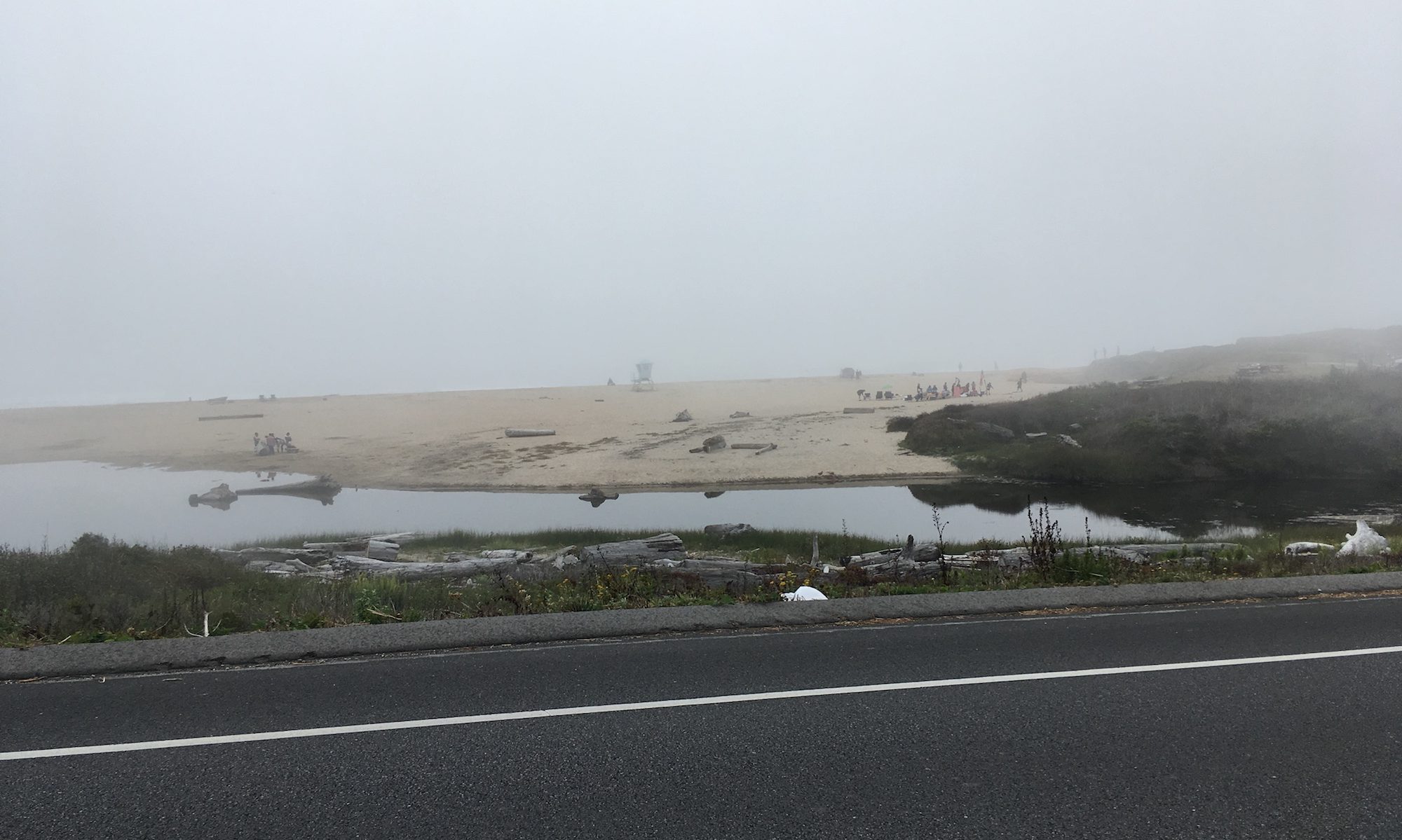
Fall of the Year

This is when it started.

Minneapolis, on the road in a strange city for a conference for a product we hadn’t deployed yet, no idea what I was doing and trying not to catch a sinus infection for my trouble (too late, it arrived as I left), and I was suffused with a darkness that couldn’t just be put down to encroaching Minnesota winter. It was the slow creeping realization, with two weeks to go, that we could fuck this thing up and that I had no plan for what if we did.

And we did. And I still don’t.

We got here well before November 8. We got here for eight years of Bush the Younger, when all of this choose-your-own-reality nonsense was pioneered. Stop acting like Bob Corker or Megyn Kelly or anyone else on the right is somehow heroic in the face of this outbreak of insanity, because their dumb asses drove the monkey to the airport every day for seventeen years. When “who you want to have a beer with” was somehow privileged as the only fit criterion for choosing a President, that paved the way for “no qualification whatsoever.” Purple Heart band-aids and Swift Boat documentaries and racist panic about Muslims and Sharia law proved that you don’t even have to pretend to have a winking association with facts as long as you fit what the Fox News demo wants to believe. And worst of all, we let a President get elected in the 21st century with fewer votes than his opponent. That should have been a fucking tornado siren for American democracy, and if it had been a Democrat who benefited, you can rest assure the GOP would have moved heaven and earth to undo the result of the election – because they spent eight years moving heaven and earth to undo the election of a black man with the temerity to win both the electoral college and the popular vote, twice.

That’s why it’s a waste of time to fret and wring our hands about preserving the norms and standards of our political system. Because those were shot to shit seventeen years ago. Once you say that the person with the most votes doesn’t win, you may as well hang it up. You don’t have a democracy any more, you have China without the organizational planning. A world where every single bill takes a 3/5 vote to move just because one side says so, a world where you can block a Supreme Court nomination for a year without consequence so it can be handed over to the useful idiot of a foreign power – don’t waste time worrying about what resistance and opposition and scorched-earth defense is doing to American political culture. The damage is done. It’s been done for years. We didn’t do these things before because nobody did. Then one side broke the seal, and it’s time to accept things are different now. You can’t un-ring the bell and it’s pointless to pretend we somehow could. We’re never going to have not elected Trump. We already burned the house down. Now we’re just arguing about how impolite it is to put the fire out if it hurts the arsonists’ feelings, when we’re not slobbering all over people covered in gasoline who are bemoaning how fire debases us. 

Because this has been a long time coming. The people who were turning firehoses and dogs on protesters in Birmingham in 1963 are still alive. So are their children. None of this ever went away. We just pretended it did because we knew it was wrong and we were content to say “this has no place in society.” And then when people persistently whispered “yes it does,” one side chose to indulge them for the sake of votes. Since Lee Atwater helped the Bush family go full redneck in 1988, the GOP has managed to win exactly one popular vote – but they’ve gotten a President in three times, and every time it was to our further detriment as a nation. The Republican Party willingly let itself be led by rednecks – not conservatives, rednecks – and now we live in the United States of Alabama and we’re pushing back hard. Five years ago, we thought – I thought – if we could just hold on and wait for the Old Ones to die off, we’d finally be able to get somewhere as a nation. More fool me.

And now matters are worse. What we’ve institutionalized is the idea that the best thing is to be as big a dick as you can, all the time, to everyone, and it will pay off in the end. If you don’t believe me, look around Silicon Valley, where an endless parade of assholes builds their advertising Panopticon out of your personal data without oversight or consequence or the balls to face an open market, because there’s always some dickhead on Sand Hill Road or Pioneer Way willing to prop his Allbirds on the desk and shoot another five hundred million dollars at a Stanford dropout with a fifteen year old brain. Our future is ever bigger businesses doing whatever they want and insisting on “personalizing” everything so that you can have your miserable life just the way you want, and never mind anyone else who might be driving you or delivering your food or standing on the same train platform. We wanted a classless society? We got a society with no class.

Two weeks in Ireland confirmed my worst fear: I didn’t want to come back. I am sure Ireland has no end of problems of its own – the Repeal 8 march on the Saturday after we arrived should be evidence of that – but Ireland didn’t look at a leadership position in the world and say “let’s let the worst people in our country shoot us all in the face” the way Britain and America did. Maybe there was a time when Ireland was hopelessly rural and backward, but it sure looks from here like they’ve managed to crack the code of having all the important stuff the 21st century has to offer without simultaneously giving in to the 19th or disappearing up your own asshole like area code 650 does.  Maybe it’s not practical for us to spend between six and nine years establishing residence and obtaining citizenship, but there has to be something I can do here that gets me separation from Palo Alto, separation from Silly Con Valley, separation from the United States of Alabama and the redneck mental defectives that make it so. And if I can find it, I might just about have three more years left in me. 

I don’t have seven.

Cead Mile Failte, postscript

So. Lessons learned. After finally visiting Ireland, what did I learn and what do I want to take back to improve my life here?

I mean, this is what I do. I go abroad and discover things I want to apply to my mundane workaday life. In 2007, London and York made me actually want to start visiting my local farmers’ markets regularly. 2010 in Europe opened my eyes to Spezi, elderflower and long haul train travel. Japan in 2015 made me want to drink highballs again, and London last summer made the half-pint of session ale an aspirational desire. So what did I come back from Ireland with?

For starters, wool. I bought a tweed flat cap and a dark gray fisherman’s sweater – certainly not the dingy off-white lanolin-rich tight-weave actual Aran sweater, but something more suited for a part of the world that never seems to get below 5 degrees Celsius no matter how hard I try to will it so. Sure, I look like somebody’s dad, but to be blunt, my whole life has consisted of me waiting to age into actually being that auld lad in the pub.

For another, I now realize that the pubs of my frequency in the South Bay are actually not that far off from the real thing if done right. The Tuesday night trad session in San Jose. The Kilkenny on tap in Sunnyvale. There’s no one place that will actually give me a snug, a fireplace, half pints, comfy chairs and live trad all at once, but I can probably get three out of five in any given spot if I play my cards right. Having experienced the real thing, my hope is that I can now embrace the local spots as warm reminders rather than cold comfort.

(And as much as I do enjoy the cheeky half, it’s nice to have the full long Imperial pint of Guinness or Smithwick’s or (insert local sub-5% ABV milk stout that I will move heaven and earth to find now) and I’ll probably have to have it in the 20 oz Yeti tumbler so that it can stay crisp and cold to the last drop. I got back, didn’t have a beer for almost a week, then had a Sonoma-area IPA and my actual tongue puckered. Lesson learned. Stick to the stuff that isn’t stunt-hopped to a fare-the-well and try out milk stouts and brown ales instead.)

Third, and this one could be big: it might just be time to knock Twitter on the head once and for all. I was very little in social media on this trip, Instagram notwithstanding, and it was proof that of all the social media outlets out there, the one that genuinely works and counts is…the group chat. Whether it’s in WhatsApp or iMessage or what have you, the group chat kicks the very ass out of the Twitters for being a good environment where you’re not constantly wading through the crap of the wider world. So there’s a nonzero chance that my various attempts at a private friends-only Twittersphere will get disposed of in favor of just maintaining the existing public presence (which in itself is less of a big deal, somehow) and I will stop trying to make this toxic thing somehow be nutritious for me. That would be nice.

The other thing I learned about myself is that in addition to fog and stone, I apparently have a thing for urban running water. The problem is, we don’t have a lot of that around here. Stevens Creek or the Guadalupe River are probably the closest, but they are dry for months at a time and don’t have buildings butting right up against them the way the canals did in London or Dublin. What I did do was change the white noise app in my phone from rain to running water…and it seems to be helping, even as I struggle to get my sleep cycle back to normal. (Naturally, I get it sorted just in time to make an early morning flight to the East Coast. Typical. Of which.)

Other than that…just patience. Wait for cold. Wait for fog. Wait for the darkness to pass you by and endure in the meantime. And just remember that someday you get to be back on the Sea Road, half eleven, listening to the session sounds drifting out of the Crane Bar and into the coal-smoky night.

Cead Mile Failte, part 6

Many countries have a national motto or creed, something ancient in Latin on a coat of arms that usually translates along the lines of ‘God at my right’ or ‘Get off my land’. The Irish national motto, Cead Mile Failte, means ‘A hundred thousand welcomes’.

-Pete Brown, Three Sheets To The Wind


San Francisco has about 800,000 people, give or take. San Jose has about a million. The thing that nobody around here seems to have grasped is that in between them is another city. It’s forty miles long, and it has a population of 1.5 million people, and it’s cunningly disguised as a couple dozen separate municipalities.

Meanwhile, the Republic of Ireland has a population of just over four and a half million. The largest city is Dublin, with just over 1.3 million, followed by Cork at under a quarter million. Then Limerick and Galway, both of which are smaller than Sunnyvale. Think of the names of these places you’ve heard of. Limerick is under a hundred thousand. Killarney has maybe fifteen thousand people. Waterford, where the crystal comes from, is 54,000. The Rose of Tralee comes from a down of 24,000. The sixth largest urban area in the Republic is Drogheda, population 41,000 – the same as the listed capacity of Vanderbilt Stadium. Shannon – home of the international airport that was the gateway across the Atlantic for decades – has fewer than 10,000 souls.

Ireland is not really an urban country. These are towns and villages that grew up slowly over hundreds of years, self-contained and in many ways self-sufficient. People in Kinvara might be commuting to the big city for work, but the big city in this case is Galway, which is the size of Mountain View. And when you go to these towns and villages, they’re all walkable in a way that contemporary New Urbanist types in America would drool over. As long as we stayed somewhere close by, everything we needed – the grocery store, the pharmacist, the pub, the other pub, the restaurant, the museum, the other other pub – it was all an easy five minutes on foot, whether in Galway or Dingle or Kilkenny. I suppose I could have managed that in the town where I grew up, for a few years, but by 1995 it was pretty clear that you’d need a car to do anything at all in my hometown and forget about any kind of bus or rail transit.

And in most every town we stopped through, there was a storefront for the local TD – that is, member of the Irish parliament. You’re never far from your government, and when the annual budget comes out, they’re going to break it down in detail on the television and in the papers. Some people have suggested that there’s a Dunbar-number problem with American democracy in that you probably don’t know anyone who knows your Congresscritter, but I think it’s simpler than that. Ireland understands terrorism. Ireland understands bigotry. Ireland understands history and its consequences, because they weren’t things that happened long ago and to someone else. Ireland is in no hurry to get out of the EU, or to shut the borders – not when one Irish grandparent is enough to put you on a glide path for citizenship. In short, I think Ireland still operates at a human scale and with a sense of perspective.

There were things that reminded me of growing up in exurban Alabama – in a good way. So many doors still lock with old-school cartoon keys of a kind I only ever saw used in my grandfather’s old house. The proliferation of electric showers in stalls raised above the bathroom floor suggests buildings constructed before indoor plumbing or electricity. Long buildings curving around roads that were trod out by hooves instead of laid out in a grid. Portions in restaurants – and coffee and soda servings – suggest my childhood rather than the Golden Trough approach of the 21st century. The grocery stores were generally small to smaller. You speak to the pharmacist behind the counter about your issue and she suggests the thing you need to buy, rather than staring at a row of pills and creams and just picking out what has the gaudiest packaging or the best advertising. And the biggest sports – the ones that had banners strung across every road and homemade signs exhorting players by name at the crossroads – are amateur ones played by the local boys (and girls, incidentally) in the name of the county, not some professional organization or sham-amateur college operation.

You don’t want for modernity at all – there’s a satellite dish out every window and wifi in every pub and ubiquitous cell coverage for rates far cheaper than the American telecoms shaft you for, and everyone’s on WhatsApp – but you aren’t a prisoner of it either. There’s an agreeable pace to life, a general sense of just trying to be decent human beings to each other, that our country decided we didn’t have to bother with anymore sometime in the 90s. When I look at Silicon Valley in 2017, I want to shake the tech yuppies violently hard and shout “do you KNOW there’s other people?” Ireland does know. You hear a horn honk on a rural road, you know it’s because the driver saw someone he knows. You stand uncertainly at a bar in a strange pub in a strange town and hear “Have you been served?” Talking of our national embarrassment evoked sympathy, and in most cases a genuine curiosity about how such a thing could have happened, that only drives home what a rotten stroke of luck it was.

In short, Ireland looked me in the eye and asked me what life could have been like in Alabama had we somehow pulled our head out of our collective ass eighty years ago or so. None of the self-absorbed get-rich-quick hustle of Silly Con Valley. None of the pinched suspicion and passive-aggressive bigotry of the Confederacy. None of the desperation of grasping at some kind of imagined prior greatness because someone decided their stupid was more to be valued than other people’s smart. Just a country at peace with who is it and what it is.

It was on this trip that I realized how irked I am by the “green beer Irish” in this country. The ones who think Killarney and the Blarney Stone are the go-to destinations in Ireland. The ones whose idea of an Irish lass is Scarlett O’Hara. The ones who take the broad twentieth-century stereotypes of Irish-American as a modern representation of Irish and try to leverage it as some sort of white ethnic shibboleth. And let’s be blunt: most of these people are actually Ulster Scots, and I’m sure I’ll have things to say when I finally make that trip. Suffice to say that after two weeks, the real Ireland is far and away better than the one made up in somebody’s head from a smattering of Bing Crosby records with the acid-trip geography of how things are in Glocca Morra.

I expected the trip to be an emotional wrench, but it really wasn’t. Not even belting out the Fields of Athenry (in a pub called the Merry Ploughboy) did me in. The closest it got was two brief moments. One was when I picked up a check at dinner and couldn’t really convey what I wanted to – which was “here we are in this amazing place, and I don’t know when I’ll have the opportunity to be back here and have dinner with my real actual blood family, so I got this.” Seventeen years I’ve wanted to visit Ireland, and I found the lock picked and the country laid out before me through the good offices of our hosts. Thank y’all so so much for that.

And the other was when we were getting ready to walk out to the plane to fly out of Dublin back to Heathrow, and seeing “May the road rise up to meet you” painted on the wall. I live in a time and a world that, on the whole, doesn’t particularly wish me well – doesn’t wish anyone well, if we’re completely honest. For sixteen days, the Republic of Ireland did just that. There are no words for how badly I needed that, or how grateful I am, or how I hope that someday I go be back there and convey my respects in person. In the meantime, I’m going to try to bring what I experienced back with me and improve the state of my life here. Of which.

Cead Mile Failte, part 5

After leaving Kinsale, we finally found ourselves heading into the proper historic East. There was a whirlwind of a stop in Waterford, mainly just to see the crystal. I did get to hold the crystal football that goes with the college football national championship trophy, which is probably as close as Vanderbilt will ever get to it if I’m honest, and then we decamped quickly for Kilkenny, the next to last in our series of short-hops. One long drive up a scenic autumn motorway later, there we were.

An aside: the European Union requires its member states to upgrade a certain percentage of their roads to be 100kph-capable. Ireland managed this by merely sticking some signs up reading 100kph and calling it a day. So you can be going down a one-lane country path with a hairpin turn and an oncoming tractor right next to a sign reading “100 KPH”. Which would be awesome if you were filming an Hibernian remake of the Dukes of Hazzard, but which tends to be a little scary in a rented Skoda Octavia (which had a noisy diesel engine that shut itself automatically at every stop until we figured out how to disable it, a broken mirror in the driver’s sunshade, and over 100,000 kilometers on the odometer. They don’t have a lot of automatics at the rental counter in Ireland).

Anyway, Kilkenny is a town of about 9,000 with another 15,000 in the hinterlands. Its town charter predates the Magna Carta and its origins are hundreds of years before even that, and it has transformed one of its deconsecrated churches into a wonderfully-done Medieval Mile Museum as the cornerstone of its well-preserved high street, which includes Kilkenny Castle and a public house called Kyteler’s Inn. The inn dates itself to 1324 and is a whole warren of rooms and chambers on different levels before descending into an outright catacombs…which in turn opens on an outside patio that lets out onto a lower street on the back side. It’s easy to believe that this pub has been running in some form for 700 years, because it was cozy and welcoming enough that my teetotal wife sat at a comfy barside stool soaking up the music and the atmosphere for hours while I nursed a couple pints of Kilkenny Cream Ale – which is kind of like Smithwicks, but nitrogenated like Guinness. I’ve found it in two places on Earth so far. One was Kyteler’s, the other was Fibbar Magee’s in Sunnyvale California. Which means I’m going to be spending a lot more time in proximity to Fibbar’s even if they closed their own smoking deck. (Those duty free Cohibas don’t smoke themselves.)

From Kilkenny we delved into the Wicklow mountains, came the back way through the Sally Gap and its almost Scottish moors, and found ourselves at Glendalough. Which was everything you’d expect. Very old, very scenic, wrapped in gray cloud and gray stone and autumnal chill. When Christianity came to Ireland, there were no cities (Dublin wouldn’t be founded until the 900s) so the bishoprics and ecclesiastical structure was based around abbeys and monastic communities rather than towns and existing settlements as in Europe. In their way, they were as much universities as churches, because it was there that the Irish preserved learning and knowledge until it could be reintroduced into post-Roman Europe. Cool gray solitude in the pursuit of knowledge…Glendalough was every bit as affecting as Trinity College Dublin, and it wasn’t hard to see myself content at either one.

I have to mention the Wicklow Heather, where we had dinner. I’ve dined in some posh establishments in my time, but none of them has ever sent a car to collect me and drive me home at the end of the night, gratis. We had a lovely dinner, only mildly irritated at first by a literal busload of Americans on tour which provoked me to comment on social media, “the day will come when I can go abroad without Americans showing their ass and embarrassing me, but tonight is not that day.” If you’re going abroad as an American, my advice is to skip the ball cap, learn to feign a convincing Canadian accent, and for Godsakes don’t join a tour group.

And then it was back to Dublin, divest ourselves of the car – when we tried to board the shuttle to the terminals and said it didn’t matter which because we just needed a cab, the driver got out and went into the Avis office to call a cab to pick us up on the spot and be spared the airport surcharge – and one last night in Howth with one of my wife’s old work colleagues for dinner and pints and gossip before that big bird home. And Ireland gets you through the security line expeditiously; the biggest slowdown was when the security man pointed at a stuffed sheep in my bag and asked “you feed him already before flying?” I said I’d feed him on the plane and he replied “best be sure he’s not the food on the plane” with a wink. And then, after another short hop to Heathrow and a scramble for last-minute goodies, that long daylight flight home that added up to a 21 hour day awake and from which I still haven’t properly recovered (but waking up wide awake at 5 AM PDT is actually working for me and will through the end of October, so I’m trying not to fight it).

It was a dream come true, to be honest. Even when things were getting squirrely on those back roads, or we had gotten down to only three Euro cash between us, it was a delight to be there. And I don’t know how much of that baseline joy could be parsed out to being away from work, or away from America, or actually in Ireland, or other stuff, but there’s a lot of regression analysis to be done there.

Of which…

Cead Mile Failte, part 4

We left Galway after five and a half glorious days and headed south to Dingle. It was the beginning of a long stretch where every night but two were spent in a different town – two in Dingle, one in Kenmare, two in Kinsale, one in Kilkenny, one in Wicklow and one in Dublin before the bird home. The problem is, I always have a certain amount of mild gloom and difficulty in a new place until I get oriented and get my wits about me. Changing towns every day makes it difficult to get through that, and more to the point, almost every one of these towns would reward a two-day stay. Dingle itself probably calls for about three: one night at the pubs, one day driving around the Dingle Peninsula, one day exploring the high street and the village generally, and then maybe an excursion to the Blaskets or similar. And this is a town of two thousand people. It’s smaller than the town I grew up in, and there’s three days worth of things to see there.

Halfway around the Dingle Peninsula, amidst the medieval beehive huts and stone forts and hairpin turns on single-lane roads, there was a village called Ballyferriter. There are two hundred stories in the naked city of Ballyferriter. And four pubs. We stopped into one that said it had a Star Wars Viewing Platform, intrigued – and found that its back patio looked across the water to where a huge set for Episode VIII had once stood last winter. Apparently the offseason last year saw the Lucasfilm crew spend four weeks building a replica of Skellig Michael, four weeks filming on it and four weeks tearing it down, and among the amusements it offered, Chewbacca turned up in person to visit a school full of kids playing the John Williams score on their tin whistles. Now the whole village is Star Wars fans, even people who cared nothing for movies or sci-fi. I told the friendly barmaid pulling me a glass of Beamish that “you folks better be ready for more crazy tourists than ever before.” As a pilgrimage site for the Comic-Con set, you could do much worse.

We also visited the famous Foxy John’s Pub in Dingle, which is a public house and a hardware store. It serves both as long as it’s open, so if you need a hammer or to get hammered, as long as the door is open you’re fine. Huge crowd in the front room with the saws and nails and such, and then a pleasant space with tables and chairs (big comfy chairs!) near a roaring fire, and then yet another covered patio outside for the smokers. And the thing in Ireland is…everyone goes down the pub. Men and women. Young and old. Every demographic. You smoke, you don’t, you drink, you don’t – the public house in Ireland dates from a time when you needed that common space not just for social interaction, but for things you didn’t have in your own home. Like television. Or electricity. Or heat and light, if you go back far enough. (Some parts of Ireland weren’t electrified until the 1970s.)

The other notable thing in Dingle was the distillery. It opened five years ago, started making whiskey, and laid it down to age – and then kicked off making gin and vodka in the meantime. If you want to be a craft distiller, but don’t have three years and a day to wait before making profit, gin and vodka is the way to go, and Dingle’s gin is a rare old spirit indeed with tons of local botanicals (fuchsia, bog heather and the like. I also had a taste of the raw whiskey before it’s cut and barreled – it was roughly 164 proof, the strongest thing I’ve ever tasted in my life, and amazingly even at 82% ABV it still had a certain richness of taste that let you know “there is a very smooth whiskey waiting under here for you in 2020.” And to see a genuine Irish distillery – not an exhibition center, not an “experience,” but actual stills and rickhousing and mash tuns – was a great experience even if I don’t drink that much whiskey any more.

Kenmare was a delight in its own way – an amazing snack dish at one pub with the softest pint of Murphy’s you’ve ever tasted, followed by a dinner at the Coachmen’s with Ireland’s best accordionist, so-called, followed by a diversion into yet another pub with a full pint of Smithwick’s to watch Ireland take on Wales with a bunch of other folks riveted to the screen. And Ireland won through, 1-0, with the kind of more-guts-than-goods victory that you used to expect from the United States. If we can pillage Martin O’Neill to rebuild US Soccer, I will pay whatever it takes. And then the walk home by the river with no streetlights…and it was quiet. Dead quiet. No light but the night sky, no sound but a gurgling brook, and you start to realize just how rural the West of Ireland really is to this day, and how much I apparently do have a predilection for running water nearby.

Kinsale was another picture-postcard-perfect town of what, maybe 2500 in town and 2500 in the outlying areas? With five churches, five bookstores and twenty-five pubs. I lined up Guinness and Murphy’s and Beamish and sampled all alike (sadly my palate isn’t sophisticated enough when they’re all fresh from the local brewer. THEY’RE GOOD BEERS BRENT.) and we wound up buying deep-cut crystal worthy of the bottle of Yellow Spot on my drinks cabinet. But this is where my wife’s genius kicked in: we’d booked a room at a spa hotel instead of yet another B&B, because by this point we needed a vacation from the vacation. A couple nights of room service and a huge bed were perfect. (Ireland likes a firm mattress, too firm in many cases, but the weird electric shower thingy definitely gives you hot enough water.) And I was able to watch a little TV. I saw the Angelus rung before the Six One News on RTE. I saw wall to wall coverage of the 2018 budget interrupted by news of the California wildfires. And I was persuaded more than ever that what passes for “news” in the United States has a lot to answer for in how we got to this point…of which, as they say.

Cead Mile Failte, part 3

As an aside, now I will discuss the beer scene in Ireland. One of our stops in Dublin, obviously, was the Guinness Storehouse, a giant Disneyland of history for any aficionado of The Black Stuff. It may be Diageo now and they may be making a dozen different brews, but the iconic Irish dry stout is still mother’s milk to millions of fans around the world, myself included. So here’s my first blockbuster revelation of the trip:

(glances around furtively, whispers) It wasn’t that different.

Guinness in Ireland is like Cuban cigars: the quality threshold is a lot higher, and you’re more likely to get the good stuff, but if you know what to look for in the States – that is, a place that goes through a LOT of Guinness, sells it as fast as they get it in and keeps it impeccably with a good nitrogen system and clean lines and knows how to pull a proper pint – the experience is almost as good. The 4P’s did this, and I can vouch for a place or two around here. Nevertheless, my first pint of Guinness was drunk in the Gravity Bar at the top of the Storehouse with a 360-degree view of Dublin’s fair city. The experience alone made it remarkable. Thing is, in Ireland, you’ll get a five-star pint almost everywhere you go, and if it isn’t, it’ll be a four-star pint, whereas in the US, you have to scuffle some to find a four-star pint. But it can be done.

A little more about the beers of Ireland. I mentioned earlier that Guinness is on two taps if not three everywhere. Smithwick’s Red, with a different logo, is almost everywhere, and many if not most places also had their newer blond and pale ales. Carlsberg was the most pervasive lager, with Heineken a close second, but a lot of places were selling Guinness’s new Hop House 13 lager – which was rich and flavorful and better than most lagers I’ve ever had, and was a perfect accompaniment to fish and chips. Bulmers (sold as Magners abroad) was the universal cider, on tap most anywhere. The only American beer with any penetration, shockingly, was Coors Light, which brings us to the next point:

Irish beer isn’t generally all that strong.

This is the whole point, to be honest. Guinness is 4.2% ABV. Smithwicks is around 4.5%. Coors Light, as it happens, is around 4.2. When you drink beer in 20 ounce servings, 7% ABV American IPAs turn into a ballbreaker pretty quickly. The various craft beers I tried – like the delightful Buried At Sea milk stout by Galway Bay Brewing Company – were all around 4% ABV, as are the other dry stouts in the Cork area like Murphy’s and Beamish (both owned by Heineken now). Beers like that, sold in the 10 oz “just a glass” size (aka the Cheeky Half) are perfect for a quick bend of the elbow.

Ireland also knows how to balance an IPA. The hops are sharp and flavorful, piney and citrus, without overwhelming the malt of the beer or being too bitter to sip. The Galway Hooker (it’s a fishing boat, you perverts) session IPA is crisp and refreshing, not a stunt beverage with a ridiculous IBU count. Franciscan Well in Cork or Sullivan’s in Kilkenny will brew you a red ale that tastes like the best of autumn in a glass. And I did find Kilkenny Cream Ale, which I’ve now only had in two pubs ever: one in Kilkenny and one in Sunnyvale. But more on that later.

The thing that saved me, though, was Guinness Mid-Strength. It looks like Guinness, but it’s only 2.8% ABV. I spotted it on the taps at the Merry Ploughboy, locked in and tried it, and it turned out to taste exactly like Guinness tastes after you’ve already had eight pints of Guinness. I had been warned not to keep pace with one of our Irish compatriots, and rightly so as it turned out – but thanks to the Mid-Strength, I did it, and got home at 1 AM just fine and up and out the next morning without harm. And then, looking at Wikipedia, I saw that “Guinness Mid-Strength was test-marketed in Limerick and Dublin from 2008.” I don’t think that tap would be there if you went back today. I think God or Loki or St Brigid or someone put it there to protect me that night, and I am thoroughly grateful.

The moral of the whole thing is that on this trip, by various instruments, I re-learned that you can have a whole Imperial pint of a flavorful beer that you pull at slowly for an hour and a half and be just fine. I intend to pursue this at home with my 20 oz Yeti tumbler and a jug of the brown ale from the local brewpub, because Ireland has figured out how to drink smart and drink well. Now if only I could find a pub around here with a flagstone floor and an open fireplace and live traditional music and a comfy chair…

Cead Mile Failte, part 2

The thing about driving in a British-influenced country is that it’s not driving on the other side of the road that gets you. Ireland has extremely well-marked roads and signage, and if you keep your wits about you and follow the flow of traffic, it’s pretty difficult to screw up. What throws you is driving on the other side of the automobile. All your instincts about where the mass of your vehicle is are wrong. Your sense of where to be in the lane is completely thrown. You reach with the wrong hand for seatbelt, for gearshift, for where to rest an elbow. God be with you if you didn’t have the presence of mind to reserve an automatic, because manual shifting with the wrong hand is insane-making. You will hit about four curbs the first full day of driving. Now on top of the wrong side of the road and the wrong side of the car, add the wrong side of sundown, and you’ll see why my nerves were shot directly we rolled our Skoda into Galway on Sunday evening.

That was a problem that resolved itself almost immediately.

Galway is the fourth-largest city in Ireland. It’s about the size of Mountain View, California, barely hitting eighty thousand souls. It is generally regarded as the capital of the Gaeltacht, the Irish-language preservation region, and is a center for traditional music. The Latin Quarter is the traditional medieval city, with winding cobbled streets and shops and pubs cheek by jowl, but the West End has its share of similar attractions on the other side of the River Corrib, and walking between them was the work of fifteen minutes, tops. 

Among the things I learned in Galway was that my genetic predilection for fog and mist also extends to stone buildings and urban waterways – the river and the canals alike and the buildings that back up to them. Strolling through the West End – here a pub, there a restaurant, there your quick-stop grocery and there your laundromat – made me realize that density isn’t just about housing, it’s about everything being close enough to walk. You wouldn’t need a car if you lived in the Claddagh except for major shopping expeditions, because it’s an easy ten minute stroll to everything from the posh department store to the greengrocers to the pharmacy to ALL THE PUBS. And the smoke in the air – there was some debate whether it was coal or peat, but somebody was always burning something that wasn’t wood for heating. It added to that sense of otherness, especially making your way from apartment to B&B along the Sea Road, walking past the Crane Bar and hearing the traditional music drifting through the air at half eleven at night. 

I had to go into Supermac’s, because of course I did. Like Jack’s back in Alabama, it’s a fast food chain that does a little bit of everything (they have the Papa John’s concession in Ireland on top of their usual burger and fries and chicken) and it’s also literally the only place I found a fountain soda for two and a half weeks. It’s also a huge Galway GAA supporter – the shirt sponsor, in fact – and it made a nice alternative to just going into the McDonalds in desperate search for a Coke and wi-fi. Not that the wireless was a problem; I think we went into maybe one or two establishments the whole time that didn’t have their own free public wi-fi. And a third of the time there wasn’t even an interstitial login page; it was just connect and go. Not even Silicon Valley is that seamless with public wi-fi anymore, and certainly not in pubs.

And the pubs…I heard music in the Crane Bar, in Monroe’s, in O’Connors, and the thing it drove home to me at long last is that I wasn’t imagining things. The Four Provinces, from 2000-2004, was as legit and authentic an Irish pub experience as you could get in the States. The same blend of traditional and American songs, people sat right next to the musicians, apple pie on the desert menu and a pint in every hand – I was trained for this fifteen years ago and was right at home the minute I scrounged a seat. The only real difference is that I don’t remember anywhere in DC serving halves, which are crucial to have if you’re trying to pace yourself. Then again, there were people promoting Outcider by Bulmer’s in Monroe’s, and when I agreed to try it, did they bring me a half? Did they bring me a shot glass or some kind of sample size? Did they bollocks, they put a WHOLE FREE PINT OF CIDER in front of me. At which point you just have to be very cool about it and accept their hospitality and try not to die. The music always starts around 9, just like it did in DC, but fifteen years has made me wish for a 6 or 7 PM start (which the two music-equipped Irish bars of my frequency in the Bay Area will afford me, thankfully, so that’s nice).

We took a couple of side trips from Galway. One was out to the Burren and the Cliffs of Moher, which was breathtakingly scenic and yet oddly reminiscent of Alabama, only this occurred naturally instead of having to render the land barren with strip mining for coal first. The other was into the hills of Connemara, the capital of moonshine – which was bright and clear and sunny, a happenstance that I am assured is virtually unobtainable and amazed everyone we told. Once you get outside Galway, the size of the villages drops way way off – places like Cong or Kinvara have maybe a thousand people in and around the whole municipality but still have half a dozen pubs. It made me wonder what we would be in for going forward…but there’ll be more on that later.

Cead Mile Failte, part 1

Seventeen years ago, I started going to Ireland’s Four Provinces with the old gang. We drank what our Irishman called “the best pint you can get outside Ireland” and sang all the old songs and carried on into the wee small hours. It quickly became home, and everything important either happened there or was celebrated there. And more than once, it was only the lateness of the hour and my inability to walk a straight line that prevented me taking my passport straight to the Aer Lingus counter at Dulles and climbing onto a bird for “the Holy Land.”

About three weeks ago, it finally began.

The notion that you can take a direct flight from San Jose to London is like something out of science fiction, made more so by the comfort of business class and the fact that Heathrow is the closest thing I’ve ever visited to a legitimate space port. It’s like the crossroads of the world (at least until I visit Dubai or something). There’s also a certain futuristic vibe to having my iPhone SE work everywhere with just a change of SIM, bought prepaid at the WH Smith, and the seamless nature of international business class making it possible to stroll into the lounge and mix yourself a whiskey ginger, gratis. Less futuristic is the fact that “European business class” just consists of bodging a sort of tray into the center seat on an A320 and  nothing else (which is actually worse than normal if you’re traveling as a romantic couple). But despite being wired and tired after the voyage, we still had enough juice to go out with our family for those first-night drinks in a pub with a sofa and a perfect milk stout microbrew (yes, the craft beer movement has hit Ireland with a vengeance, of which more later).

Dublin is a city of 1.3 million. So a little bigger than San Jose or San Francisco, depending on how many of the suburbs you want to count, and includes the benefits of being a world capital and a thousand years old. My cousin compared it to Nashville, and by comparison to Dublin you can see the Nashville vs LA relation. It’s smaller, the transit is far more bus-based (there’s one light rail and it’s slow as balls, and one commute train system that isn’t bad), but it’s also more accessible – nearly everything we wanted to see was within a few miles and anything was either on the tour bus loop or easily walkable from same. 

It also has a lot of the history. You can still put a finger in the bullet holes at the GPO and walk into the cells at Kilmainham Gaol. The Easter Rising was in 1916, the Irish Civil War in 1922 and the Free State not fully transformed into the Republic until after the Second World War, so while it’s been a while since the British yoke was (mostly) thrown off, it’s still not appreciably more distant than, say, unchallenged Jim Crow in the American South. (Of which more later.) Eastenders still comes on the telly at 6 PM, though.

Dublin was a great place for pubs. I made it into Kehoe’s, last year’s Dublin Pub of the Year, and half a dozen others besides, all with two taps for Guinness at a minimum and frequently three varieties of Smithwicks (in addition to the red ale that comes to the US, there’s a pale ale and an Atlantic Blond as well) to go alongside the Carlsberg and Hop House 13 lager options and the Bulmer’s cider in its own mushroom-shaped glass to hold the ice for those who use it. But the standout establishment was a place in the foothills of the mountains outside town, called – of all things – the Merry Ploughboy. It was dinner and a show, with the musicians playing all the same sorts of things I heard in that pub in DC all those years ago. And I was prepared, and I belted out the Fields to the amazement of our whole traveling party (including the woman who I was specifically told NOT to try to keep pace with. Of which.)

Here’s the thing about Dublin, though: it’s an anomaly. The second city in the Republic of Ireland is Cork, the rebel city, which has a population around 200K. No other city in the south of Ireland, aside from those two, is larger than Sunnyvale, California. Ireland was never meaningfully urban – the ecclesiastical framework was built around the abbeys and monasteries rather than cities, and despite the first Norman invasion coming before Magna Carta, England’s control of the country barely extended past Dublin until the 1600s. It’s hard not to shake the sense that there’s Dublin and there’s everything else (and Cork, the Texas of Ireland, does nothing to dissuade you from that opinion). So when we picked up the rental car on Sunday, it was to plunge headlong into the real thing. And that is when the real story begins.

On the road

Heading abroad again. After seventeen years I’m finally on my way to Ireland. There will be pubs. There will be pints, although they will almost certainly be taken a half at the time. There may or may not be singing. There will be very nice accommodations in transit and we’ll almost certainly have a room booked for every night before we leave. There will hopefully be no 90-degree heatwaves or sudden-onset sinus infections to confound us as in years past. And hopefully the GlobalEntry registration will make it a lot simpler coming and going and avoid making a scene with the Border Patrol.

Because there’s no getting around it: this is a difficult time to be an American in the eyes of the world. I’ve said it elsewhere, but it bears repeating: America, in 2017, is the Alabama of the world. How you feel about that and how you react to that probably says as much as anything about what kind of person you are. I’m no stranger to being vaguely embarrassed about whence you came and feeling like you have to demonstrate that you’re not about what your home patch screams to the world “this is what we’re about.” My one hope is that I can point to California on my hat and at least get the benefit of the doubt – hopefully our state’s branding is strong enough to say “if there’s one part of America you can count on being Never Trump, it’s the Golden State.”

I’ll be honest: the last trip to London, problematic as it was, still had a nasty undercurrent even after correcting for the heat and the sickness. It wasn’t “what if we could move here,” it was “what if we had to move here?” and I would be lying not to acknowledge that there’s a lot of that weighing on me right now. There are a handful of folks whose fortunes we have to worry about in America and 2017; if they were going to be all right and/or we could take them away with us, I’d be all in on decamping to this place where they speak English yet are still in the EU, where some of the politics are iffy but there’s no actual Nazis involved in governance, some place out of the front line of fire of a North Korean maniac where you don’t have to spend days begging the government not to blow up health care for millions of people to line the pockets of rich assholes, where there’s a burgeoning tech sector that hasn’t taken over the entire local economy and caused it to disappear up its own ass while ordinary non-Eloi have to work twice as hard and rent their rooms and drive side hustles and the like just to keep what they have. Some place where unlimited talk and text and 15 GB of data will cost you $24 a month prepaid with no commitment. Some place where the national motto is literally “a hundred thousand welcomes.”

In other words…if I go to Ireland, will I be willing to come back?

The lineup

Much is being made of the fact that there aren’t the first-day lines for the iPhone like there used to be. And it makes sense. For one, the improvements to the iPhone have been highly incremental – the iPhone 5 got a bigger screen and LTE in 2012, and since then only the larger sizes in 2014 have been an appreciable change. If you had last year’s iPhone, there’s no call to run out for this year’s; the days of leaps and bounds are basically done. But for another, the iPhone X has ruined the iPhone 8’s appeal. The 8 is basically a slightly improved 7; the X is the Next Big Thing (and pronouncing it as “ten” does the 8 no favors either), and since the X doesn’t arrive until November, where’s the incentive to run out and stand in line for an incremental upgrade, especially when Apple manages to drop-ship on launch day so effectively and you can just hang out at home to get it?

I’m more convinced than ever that I’m out on the 8/plus. I reluctantly concede that if someone else (say, work) were to pony up the $1000 for the iPhone X, I would be intrigued just to see what the impact of a 5.8” screen is on my life. Given that my precious Kindle Paperwhite is only a 6” display, and that I could use white on black to limit the battery draw thanks to AMOLED, and that video is probably actually useful on a screen that size relative to a 4” display, the iPhone X would be a legitimate contender as One Device To Rule Them All, even if it’s still a hair bigger than a hair too big. But at that price point, the incentive is still: let somebody else go first.

I still hope against hope for the prospect of an iPhone SE2, with the processors of the 8 and maybe a camera improvement while eschewing the space-wasting of 3D Touch and wireless charging. Or an iPhone X-Minus, with a 5-inch AMOLED display in a package roughly the size of the original Moto X – a hair bigger than the SE but smaller than the 6/7/8 line. Either would open my wallet. But as it is, I’m going abroad again with the SE (and maybe the Kindle for the plane trip). Of which…