Secession by other means

Let’s be honest, 2009 is when the Cold Civil War really turned hot. A Democratic Congress and a BLACK PRESIDENT sent the modern Confederate GOP around the bend. This was THE END OF THE WORLD and had to be resisted at all costs, which they did. Scorched earth all the way, in a way the Democrats chose not to do to George W. Bush despite losing with more votes for their candidate than he got. (A lesson I hope the Democrats will go to school on this time.)

But where it really became possible was in the tortured logic of the Supreme Court when John Roberts decided that individual states were free to opt out of the Medicaid expansion in the Affordable Care Act. And so they did. GOP-controlled states decided that they would simply not participate in any meaningful way in the biggest expansion of health care access since Medicare.  That was, in effect, secession by other means. Through tortured logic, “states rights” and the malice – willful or otherwise – of the Chief Justice, they cut themselves off just so they wouldn’t have to be part of “Obamacare.”

There’s a lesson here, and that is: a surprising amount of stuff still depends on the states and is only “federal” inasmuch as Uncle Sam provides a financial carrot to encourage things. Stuff like education funding, stuff like highway funds – the only reason the drinking age is 21 nationally is because Congress made that a condition of getting interstate money back in the 1980s. If a state wanted to get on its high horse and reject the temptations of the federal sugar tit, they could cut the drinking age to 12 and there’s nothing in law to prevent it.

Thing is, you’re starting to see this go the other way. California raised the smoking age to 21 (which they are legally able to do) and legalized weed (jury’s out, even if you consider the irony there). California already has stricter air-quality standards than the EPA because the California Air Resource Board predates the EPA. And California’s gun control laws are already tighter than anywhere else in America bar perhaps Massachusetts, to the point where most gun makers have a separate line item on the website for “CA Compliant” merchandise. Even that Federal money stick goes the other way. Republicans are threatening to cut federal money for “sanctuary cities” and San Francisco has already told them to go shit in a hat. Covered California isn’t going anywhere anytime soon, and there’s very little to prevent it being sustained locally even if the ACA bites the dust nationally, not least because Jerry Brown has never been averse to raising taxes to pay for goods and services. Judging by the GDP of the state – top ten in the world – it doesn’t seem to be hurting much.

In 2014, California sent more money to the Feds in taxes than it got back, to the tune of over $3500 for every man, woman and child in the Golden State. If Ferret Top wants to cut taxes, California will be happy to keep that money for itself, and will do just fine spending on itself. We’ll be happy to show you what happens when “states rights” becomes a race to the top instead of the bottom. We are California. We’re where the future comes from.

Looking Forward

Consider this:

• A baseline safety net so that small employers are spared the expenses of health care and retirement savings, possibly even replacing the minimum wage with a guaranteed minimum income

• Intercity high speed rail, interurban light rail and municipal streetcars anywhere the bones exist to support them

• The dollar coin replacing the bill, and just round everything up to the nearest nickel (and let the round-up difference feed the safety net above)

• Promotion and relegation in college football now that conferences are meaningless

• Rugby sevens is a thing

• Vocational education comes with an AA degree and is as respectable and remunerated as entry-level work straight out of college

And most importantly:

• The three political parties in this country are properly labelled and proportionally separated, so that Great Society Democrats, New Labour and the Confederates can be handled appropriately rather than shoehorned into two parties that result in distortion of actual political belief and disproportionate advantage for a ethnically and regionally homogeneous rump faction


This may all sound insane, but it’s all a logical response to the direction of the 21st century. Fifteen years ago, it was apparent – or should have been – that the combination of global free trade and information technology was going to radically reshape the way our economy works. And it’s not unlike what happened in the 1930s at a time of global depression and economic and political upheaval – we went from being a predominately agrarian society to a predominantly industrial one. At the time, it took a lot of government intervention to smooth the transition and a lot of money, because when that shift first happened in the Gilded Age a lot of people got stinking rich and a hell of a lot more got used as factory cannon fodder.

Consider the “gig economy” which everyone is so fond of – the techie types, especially the ones who don’t work at the tip of the spear, think it’s great that you can have all this flexibility and autonomy and work-when-you-want and…you can’t make a living at it. Ask your Uber driver. Hell, Uber is openly pitching this as “your side hustle” because so many people have failed at making a living wage doing it. Gig economy, contracting (1099 or otherwise), part-time, whatever: there’s a whole lot of work out there that does not fall under the traditional 9-to-5 Monday-to-Friday concept, even before you take into account that it’s 8-5 on paper and you’re realistically going to have to do some more on nights and weekends in a lot of places.

And yet, people still need to be able to make a living. How the hell do you go about that?

There are several projects kicking around concerning the provision of a minimum guaranteed income: that some entity, probably the highest level of government, will provide you a cash income of a certain amount, gratis. No strings attached. Spend it on what you want. When you stop flapping your jaw with the “HURRRR DURRRRR FREE GOVERNMENT HANDOUT” Fox News hillbilly dumb fuck yammering and actually think about it, this is kind of earth-shattering. Put this down in place of housing assistance, in place of food stamps, in place of WIC and TANF and an alphabet-soup of other welfare-type programs. 

For the 48 contiguous US states, last year’s threshold for the poverty line for a family of 3 was $20,160. Assuming you work a 40 hour week EVERY week, with no vacation, that means that to support a family of 3, you need to make $9.70 an hour. For the record, the federal minimum wage is $7.25 an hour. That’s what is known in this establishment as Bad Arithmetic.

But.

If you get $100 a week from Uncle Sam – that’s it, that’s all it takes – then you can take that minimum wage job, but you’re still over the poverty line. Make it $150 a week and you might even be able to take Christmas Day off or get sick for a minute. Or take some other job that needs doing but never seems to pay like it should, whether it’s teaching or volunteer work in the community or what have you.

Now, get rid of Obamacare and all the chaos that goes with trying to make a shitty privatized health system somehow cover everyone. Instead, Medicare. The end. Everyone goes on Medicare the moment you’re born, and that’s an end of that. It’s already been well established that most every government insurance program – Medicare, Medicaid, Tricare, VA, whatever – has lower administrative overhead and in turn lower costs than private insurance. That sets the baseline – if you want to purchase private insurance beyond that, feel free, as most Medicare patients have some kind of gap insurance for the rest of it, no problem.

But see, this is the thing we’ve done: we’ve taken the burden off your archetypal small business owner to cover the insurance costs of employees. No more part time, no more fretting over people who work more than 30 hours or trying to keep them below a point where you have to provide their insurance. That’s over, that’s done, it’s not your responsibility anymore. Will taxes go up to accommodate this? Possibly, but since your overhead is going down, it probably comes out in the wash. But here’s the point to all this: if your health insurance is not tied to your job, and if everyone – everyone AT ALL – is getting some sort of foundation income, it means that you CAN take whatever “gig economy” jobs are out there without starving to death. It means you can start your own business and not worry that you won’t have food on the table for a year or will be guaranteed to go bankrupt if you get sick. And it’s been destigmatized – no one is on welfare. No one is on Medicaid. Everybody, everybody from the bum on the corner drinking a Coke to Mark Zuckerberg and Donald Trump, gets the same foundation income and the same foundation health care.

More to the point – if you fix this foundation income nationally, you’ve suddenly created an economic stimulus program for the poorest parts of the country. If the federal minimum wage is the same everywhere and everyone gets the same foundation income, where is that money going to go further: San Francisco or Birmingham? Just like that, you’ve incentivized people to consider somewhere that isn’t a megalopolis, because your cash will go further no matter what you’re doing. And in a world of remote work – where you could be doing anything from sitting in a call center to using a VR headset and drones and robots to be a mall cop – there’s no reason you can’t do your job at Westfield Valley Fair in Santa Clara, California from your comfortable cubicle in Knoxville, Tennessee – where there’s no state income tax.

The point of all this is: the nature of work in America has changed. The coal mines aren’t coming back. Labor intensive manufacturing isn’t coming back. The half-wits and slack-jawed yokels howling MAKE AMERICA GREAT AGAIN are ironically arguing for an era when the US had peak participation in labor unions and the highest rates of personal income tax on record (but we can stop pretending that “economic anxiety” is anything but a euphemism) but one where there was precious little automation and no ability to ship things from around the world. If the textile mills could move from New England to the South, they were always going to move on to Central America and inevitably Southeast Asia, and for the same reasons. As we move increasingly toward the point where “work from home” is so ubiquitous as to be a girl-group euphemism (and a hit single), we have to start thinking about what that work looks like and how we cross the bridge without throwing people off it.

But here’s the thing: the time to start thinking about that was in 2000. And instead of crossing the bridge to the 21st century, we decided that it was okay if a jug-eared hayseed with fewer votes was handed the controls, and then spent years shitting ourselves in panic, and then – when we got a grown-up in charge again – enough people decided that adult reasoning was The Other Side and were against it no matter what. So you can basically draw a straight line from Florida 2000 to the reality-show charlatan that will be sworn into office in two weeks. And the 21st century is on the far side of that line. And there’s no telling whether America will ever be able to cross it.

2016 and the miracle of Huell Howser

The big trend lately, it seems, is to pretend like California isn’t really America. The GOP has forgotten that it used to have the state on lock from 1968 to 1988 or that it got two presidents from there – apparently the existence of a robust Democratic majority and Covered California and the California Air Resource Board and a nonwhite majority means that for some reason, California doesn’t really count. Which is predictable. It’s different from them, and we all know that the worst thing you can be to the Confederates is different.
 
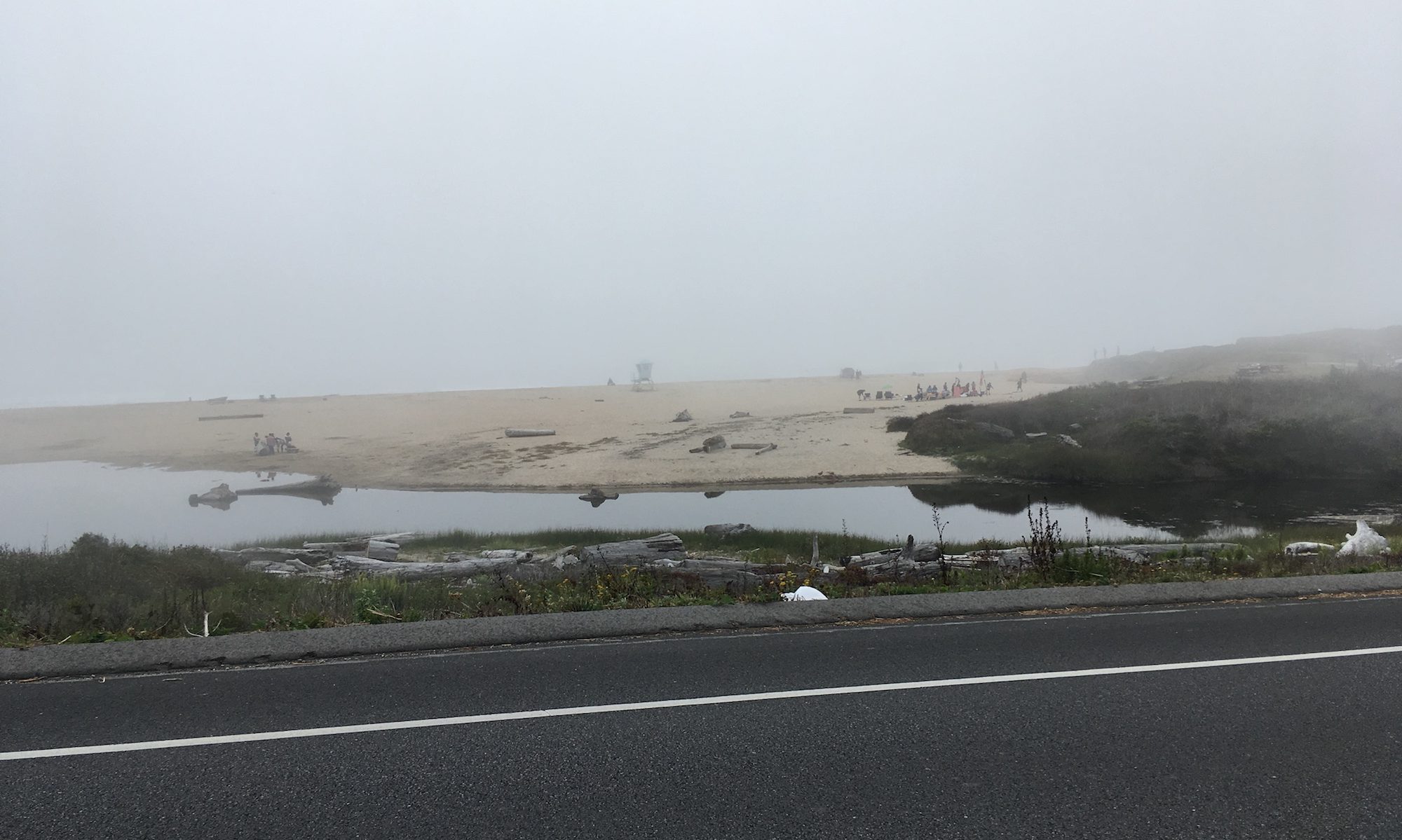
I started this year on January 1 getting up at jackass o’clock in the morning to catch a Gold Line train to Pasadena to see the Rose Parade. I’m ending it with friends and family and someone seeing California for the first time. In between? I rode the Coast Starlight home from LA and the Pacific Surfliner from Santa Barbara to Disneyland. Took a flight on Soarin’ over California for (hopefully not) the last time.  Spent two weekends in Yosemite, staring up at the stars (or at Half Dome). Made my first trip to the Lair of the Bear. Rode down to the Central Coast and got away from the world for a while. Watched minor-league baseball in San Jose under a warm blue sky that turned into a chilly evening. Caught a lingcod off the coast at Davenport and deep-fried it with a gang of Santa Cruz surfers. Parked my car on the edge of the Western world and watched the fog roll in while listening to echoes of DC. Exercised on base at Moffett next to the 129th California Air Guard. Camped not far from the birds at Bodega Bay. Rediscovered old haunts from Sunnyvale to the Sunset. Attended an Irish fleadh, a German Christmas market and two art and wine festivals, all without leaving my local high street. Welcomed Vanderbilt in to take two out of three on Stanford’s turf.
 
I went to Minneapolis wearing a black-and-gold Oakland A’s hat and to London wearing a blue wool flannel cap with a gold silhouette of California on the front. I don’t think I was wearing anything exceptionally Californian in Maui, but it was only January. And as summer rolled into fall and fall approached Christmas, I found myself more and more wearing either the plain solid gray throwback A’s hat, or that California lid I got for my birthday.
 
This was also the year I started watching California’s Gold.
 
Huell Howser was born in Gallatin, Tennessee. He went to Knoxville for college, made student body president at UT, served in the Marines and on the staff of Sen. Howard Baker, but after TV stints in Nashville and New York ultimately wound up in Los Angeles in 1981. About ten years later, he began a TV show that became synonymous with him, exploring the byways and backroads of California. Here, a ghost town battling to restore its name to what it was before the Post Office interfered a hundred years earlier. There, a small family farm still drying persimmons in the traditional Japanese style. Over there, a couple with an Aquacar driving from the road directly into the reservoir and puttering around.
 
Huell Howser – you couldn’t ask for a more Southern-sounding name. He sounded like a plate of grits to the end of his days, when he died at 67 only three years ago. And yet, he is remembered and revered throughout the state, especially in greater LA. I’d love to be able to get half as excited about anything as Huell seemed to be about everything.
 
I came here twelve and a half years ago in hopes of making it in Silicon Valley. And I did, sort of. And then things didn’t quite work out the way I planned, and one thing failed to lead to another, and before you knew it I was in an unpleasant space that I never really pulled out of. Which – given what happened to my old DC employer, and what’s happening in DC right now both culturally and politically – would have probably worked out just the same had I never left the DMV. The past isn’t a thing you can go back to, and that’s been a hard lesson to learn my whole life long.
 
I’ve said before, over and over and !-ing over, that I hate it here in Silly Con Valley. I do. I absolutely stand by that and I don’t see it changing anytime soon. But once you get outside the bleak orbit of Palo Alto and Cupertino and Google and Facebook, you’re still in California. And that’s the thing – no matter who you are or what you believe, California has a place for you. That’s not something you could say about where I grew up, because it sure didn’t. And for far too long, I’ve stooged along here as best I could because I was stuck on the surface, and Silly Con Valley definitely doesn’t have a place for me – I’m over 40 and not a programmer and not a VC, so I’m officially surplus to requirement. Imagine if I wasn’t white or male. 
 
But turn that aside, step out of the loop, rotate your perspective ever so slightly – and instead of Silly Con Valley, you’re in California. For over two centuries, this was the land of gold, the land of dreams, the land of opportunity before it was even American soil. Maybe it’s because it was a thing before America even got here, but California stands apart – the largest economy, one not harnessed just to oil or to financial services or to wheat or corn. The largest population, a fifth of the country. The only place with skiing AND surfing AND a Disney theme park AND vineyards AND rice paddies AND rail transit. Movie stars, hybrid cars, missions to Mars. (Accidental bars.) 
 
Huell Howser came to California, and California embraced him and he celebrated it for decades. Never married, no children, but left hundreds of hours of video proof that if you come here and look long enough for the right things, California will love you back. I’ve gone too long without looking, and it’s time I changed that and truly made this whole place my home. 2017 is the year I do like the bear on the cover of the old sheet music and embrace California. 

“When you came in here did you have a plan for getting out?”

And thus did the greatest of all Disney Princesses inadvertently provide us with the perfect eulogy for 2016.

This year has been just plain godawful. Even as my own life more or less sorts itself out into something I can live with, the rest of the world goes to shit. Talent is taken from us and not replaced, stupid metastasizes and reaches critical mass, and for too many people, just being is becoming unsafe.

The moral: treasure the things you enjoy and the people you love. Everyone you know will die someday. That restaurant, that pub, that shop will all close. The show will be cancelled. The sole of the shoe will come unglued and the jacket won’t fit anymore. The car repair will cost more than the vehicle is worth, they’ll stop making that soda, your heroic wide receiver will graduate. A great and good man will end his term and be replaced with a racist charlatan. The pride and hope you had eight years ago will turn to bile in your throat and you’ll lie awake at night wondering how we survive this one.

And yet.

George W. Bush somehow got re-elected in 2004, but never broke a 50% approval rating again. He was underwater the day he was sworn in again and never recovered, because enough people saw through the failure. The only hope is that the Democrats in Congress fight long and hard and that they do what is necessary to show people a different path such that 2018 is winnable, and then 2020. Too many Democrats thought that 2008 was the end, the final victory, the music swells and the hearts soar and the war is over.

As Princess Leia could have told you, the Empire always strikes back.

Festivus

I mean, there’s only one thing to talk about, right? No amount of Apple disarray or sports nonsense or work shenanigans can measure up to this. This is the year that stupid won. This is the year that a loophole in the rules, the callow ambitions of a corrupt party, the fecklessness of a whipped press and the indulgence of stupid as the most valid American lifestyle gave us the ultimate result of all of the above: a media-created moron who embodies other morons’ idea of a smart person. And now we get an idiot’s idea of a President.

With an engaged and educated population, the Internet could have been a useful tool of political discourse. But we don’t have that. We’ve venerated the stupid for a decade and a half, and instead, what we got was an electronic force multiplier for willful ignorance. Facts and lies on equal footing, and you’re entitled to your own reality. And an entire party went along with this because Donald Trump is an even more egregious version of what George W. Bush was meant to be: a matador with a signing pen so the GOP in Congress could loot the country for itself.

Now? Who knows. Now we’ve just got to fight like hell to keep the focus where it should be: on making sure that the world doesn’t blow up. Hillary can’t be the veto now. We have to be. And we have to keep it going, and we have to thrash the equivocators and both-sides-boo-hoo media monkeys. We have to believe that America is something worth fighting for and something worth saving. We’re going to need time, and money, and effort, and magic. And not a small amount of sour mash bourbon and strong porter. But mostly, the will not to give up and not to give in and not to normalize the unthinkable, because there is no unthinkable anymore. Be prepared for anything. Fight for everything. Defend who we are. Of which.

second impressions

It’s not getting any better. The battery life on the 13” Touchbar MacBook Pro is abysmal – partly because yes, running a Retina display with an i7 processor and 16 GB of RAM is hard, but also because the battery is only two-thirds the size of the previous MacBook Pro Retina 13” model’s battery.

This is getting out of hand. This obsession with making everything thin and light and stylish is going to kill Apple in the professional realm, because Steve Jobs was right: we’re moving toward a computing world of cars and trucks. And if you’re not one of these all-hat-no-cattle bro-country rednecks, you want a truck not because it looks cool, but because you need a damned truck. And Jony Ive, in his inimitable bullshit limey skinny-britches manner, has given us the equivalent of a shiny all-glass pickup truck with a neon undercarriage and a four-gallon gas tank. Sure, I could have gotten a better battery in the non-Touchbar model, but then I could have exactly two USB-C ports, one of which I need for power, and been right back to the MacBook Air problem of one port to choose between external display or gigabit Ethernet and not even a regular USB option as fallback.

What I wanted was a professional grade laptop that I could use for work. What I have is a computer that right now I cannot plug into any of my work accessories – not Ethernet, not my desktop monitor, not my iPhone cable, not any of the thumb drives – without adapters that, in some cases, are backordered for delivery in three weeks. And on the previous MacBook Pro, I could have plugged in Ethernet and an external display and power and still had multiple USB inputs. If I do all that now, I’ll have…one. Put another way: if you buy a MacBook Pro and an iPhone 7, you have no way of connecting them that isn’t wireless.

I’ll repeat what others have said: the MacBook Pro may be the laptop of the future, but we need a MacBook Pro for right fucking now. Apple isn’t interested in making that, and what that says about the future of Apple is chilling for someone whose career is based on supporting Apple products in the enterprise.

The truly ironic thing in all this is that my iPad mini, which I bought through ill-gotten means on Boxing Day in 2013, is still kicking and works just fine. I’m on my second SmartCover, but in all other respects it’s held up pretty good. The battery life is still more than acceptable – runs rings around this brand new laptop – and it fits in my peacoat pocket and pretty much makes it unnecessary to carry a laptop anywhere. I didn’t even need the laptop at the JNUC 2016 conference – the iPad and iPhone gave me alternate data options (the Wi-Fi was shit on toast) and all-day battery usability in a way the laptop couldn’t. And the iPad mini got there three years ago and hasn’t let me down since, from Portland to Maui to Disneyland to Legion Field. Even the 200 MB free LTE data every month from T-Mobile is an ongoing value.

Apple was already making sleek pretty consumer portables – and I know, because the iPad mini has been my only personal “laptop” since I got it. It’s the only thing I use in the evenings at home for browsing or reading or Slack or making notes or what have you. It’s there. It’s fine. There is a role for the professional laptop, and Apple’s just not interested in filling it any more. That’s just one more piece of bad news bullshit to lay at the feet of this godforsaken year we’ve had.

Twenty years ago…

I sat at Cafe Du Monde knocking down beignets and cafe au lait and reading the USA Today, and saw the news that Apple was buying NeXT for $400 million – and bringing Steve Jobs back into the fold as an advisor to the CEO. And I’ve said it before, but I clearly remember thinking “well, this is it. We live or die on this one.”

It was worse than we thought, to be honest. It wasn’t much known, but to some accounts Apple was only 90 days from bankruptcy. The product line was a disaster area – the battery issues with the PowerBook 5300 meant that Apple couldn’t ship a reliable PowerPC laptop two years after the transition began – and there were all kinds of strange dalliances with things like the Pippin game console, or the eWorld online service, or the godawful Twentieth Anniversary Macintosh. But looming above everything else was Windows 95 and the fact that Apple was no closer to shipping a next-generation modernized operating system. Pink, Taligent, Copeland – all busts. The general consensus was that Apple would have to buy their new OS from someone else, and that someone was generally assumed to be Jean Louis Gassee’s Be, which already ran natively on PowerPC hardware and brought all kinds of modern features with no legacy cruft.

But Be knew they were in the catbird seat, and they were driving a hard bargain, and when NeXT was on the table, Steve turned on the Reality Distortion Field to the max, and next thing you know, money changed hands and Himself was back. Less than a year later, I’d be making my living off the support of Apple products. I still am. And Apple went from the brink of collapse to the most valuable company on Earth.

It’s going to be important to remember in days to come: you can come back from a hell of a lot.

The Pact

Some fourteen years ago, back when we were starting the great pivot from Afghanistan to Iraq and people were talking about the next smoking gun being a mushroom cloud, a phrase that ricocheted around the echo chambers of the American right was “the Constitution is not a suicide pact.” In other words, we should be prepared to shitcan large chunks of the Bill of Rights – not least the first, fourth, fifth and eight amendments almost in total – because the threat to our national survival was too great for things like enumerated rights and freedoms.

Today, December 19, those same people will argue that the Electoral College formula created in 1787 to gain the assent of slaveholders to the new Constitution is so sacred in 2016 that we must elect the embodiment of weaponized ignorance because the formula says so. This bit must be slavishly followed, because…well, let’s not mince words: because as in 2000, it means partisan advantage in the face of contrary popular will. And if there’s one thing the GOP worships in 2016, it’s partisan advantage.
This is the Southernization of American politics, because the GOP long ago adopted that most critical of Southern framing: us versus them. US is right, forever and always, and THEM is always irredeemably evil. There is no coherence or cohesion to what US believes; the notion of government as jackbooted thugs coexists side by side with Blue Lives Matter police worship. The exact same policies become anathema as soon as the other side adopts them (such as the Heritage health plan from 1994, aka Romneycare, aka Obamacare). 
 
That, and you’re entitled to your own facts. Belief, if you like, because beliefs are stronger than opinions. Conspiracy nonsense is believable, which makes it true, whether it’s the CIA cocaine operation at Mena or the murder of Vince Foster or the fake birth certificate for a Kenyan baby or the pedophile ring run out of a DC pizza joint. No amount of proof is sufficient to demonstrate it’s not true, especially if you believe hard enough. 
 
And that’s the risk. The enemy, as was said so many years ago, isn’t conservatism or liberalism. The enemy is bullshit. Bullshit too plentiful and overwhelming to refute. Bullshit that wins out on volume because it’s too much to beat down every single individual packet of bullshit. The bullshit will always get through, and people who don’t know better – or won’t know better – will fall before it.

Actually, there is coherence and cohesion to the modern GOP belief system: it’s called bullying, and it’s how “Blue Lives Matter” can coexist with the open carry of firearms and how the admiration for a Russian totalitarian can launder the exposure of classified information. The Trumpets who are now trying to read California out of the Union as somehow not really America have it all wrong. Silicon Valley is full of natural Trumpists: people who aren’t aware there are other people who aren’t like them, who are the embodiment of I GOT MINE FUCK YOU, who don’t care that we live in a society. That should have been warning enough for anyone that this was possible. As Uber, so Trump: do what you like and the facts and the law be damned, because your sycophants and worshippers will laud you for it.

And there are plenty of those. The GOP has spent the last 25 years powered by weaponized ignorance fueled with bullshit. It started in the Clinton years with exaggerations, misrepresentations, things that could be explained but if you’re explaining you’re losing. Then it got progressively worse, with lies about things that could be disproved but were complicated to demonstrate. And the bar just kept getting lower and lower until 2016, when the GOP lied constantly about things that could be instantly and trivially disproven – knowing that their base would reject the proof. And because our system can’t cope with shamelessness, we got burned. Badly. The problem is, if you can’t have truth, you can’t have a society. We have to be able to interact truthfully. If we can’t, we don’t have a society.

Donald Trump managed to seize the office of President with a minority of the vote, enabled by foreign powers and the willing collusion of an enabling political party. His win is compromised, his legitimacy is incomplete, and he is owed no more respect than he himself offered his predecessor. In the meantime, we need something we haven’t had before: an Opposition of National Unity, with Democrats and those Republicans willing to disavow their man joining forces to try to limit the damage in the name of what we at least used to think of as our shared values – at a minimum, experience and professionalism and not letting a foreign nuclear power drag us around by the dick. It’s a weak person in charge. You can smell the weakness in every tweet, every lashing out. And weakness in high office usually ends badly.

Because that’s what it’s based on – weakness rooted in fear. Since 2001, fear worship has become the sole organizing principle of the GOP, and their sole pitch is “We can make things go back like they used to be.” Which is a lie, but one that lets them deliver a never-ending series of things preventing that. Until we get rid of all the brown people, all the gay people, all the working women – until then, they’ll always have someone to blame. Someone else, of course, because the hallmark of the Southern GOP is the idea that our side should be immune from the consequences of our actions.

But if we survive this, there must be a reckoning this time. No more kumbaya, no more let-us-reason-together, no more we-want-to-look-forward. A completely unqualified person has been made President. Republicans let this happen and made this happen. This time, we have to correct those who made the mistake. No forgiveness. No forgetting. You fucked up. You pay. You bear the consequences of your actions. For two decades, the GOP has been the party of scaring the shit out of Ed Earl Brown so the one percent can live a life without consequence. If there is to be one mission for the Democrats, let it be this: actions have consequences. Those who did this must be held to account for it.

And in the meantime, I’ll be here, in the most populous state of the Union, the largest economy in the Union, the state that I so often described for better or worse as “where the future comes from”.  The state which – but that’s another post.

Rogue One eve

It was different being a Star Wars fan in 1979. We knew The Empire Strikes Back was coming. We had Splinter of the Mind’s Eye and the Han Solo novels, none of which were really meant for a juvenile audience. We had Star Wars itself, and the soundtrack double LP, and the storybook version and the comic book version and the novel version (which actually dropped six months before the movie). We had maybe 20 action figures and a half dozen ships. And that was all. 

This was a world without the Internet, without cable TV, without VCRs. If Star Wars wasn’t in the theater, it wasn’t where you could see it. Today, when my niece decides she’s into Star Wars, there are eight feature films and at least two cartoon series and video games and a million toys and a whole Expanded Universe of new material since 1991 even if 90% of it no longer counts. If you want more story, they’ll give it to you no questions asked. 

We didn’t have that. At all. If you wanted more Star Wars, you were reliant on your imagination. If you wanted to know how the stole the plans or how Darth Vader returned or what happened next, you had to make it up. That’s why Empire was so huge in 1980, and why The Force Awakens was the event of a lifetime last year. In both cases, it was something we had never anticipated having: more. This is what happens next. 

Rogue One is different, in a way. It’s an experiment. It’s a bet that you can branch off the main story of the saga and tell some ancillary stories. It’s a story that basically takes place in the first two paragraphs of the opening crawl of Star Wars. In a lot of ways, it’s the prequel we wanted: not a lot of wittering about, all taking place a generation earlier, but an immediate how-did-we-get-to-the-skies-over-Tattooine story. The same Rebel base, the same political environment, the same fashion and wardrobe, the same design aesthetic as 1977. It’s a nostalgia play as much as The Force Awakens, but in a different way. 

So here we go. Reviews are mixed, but enthusiasm is high, and we’ll soon have another piece of new canonical feature film – something  I would have sworn in 1990 or 2012 that we’d never see again. And I’ll be there at 7 PM tomorrow, and for a couple of hours, in every way a 44 year old can be, I’ll be six again. 

First Impressions

The MacBook Pro 13-inch, Late 2016, Four Thunderbolt 3 Ports finally landed on my desk at work yesterday. 24 hours in, I think I have it imaged and sorted more or less the way I want it. Close enough for not-for-profit enterprise IT work, anyway. Thoughts so far:

* My previous laptop was a 13-inch MacBook Air from 2012, which was STRUGGLING to the point I had left it permanently parked on my desk and replaced with a first-gen MacBook (12”, Core M) – which is the blogger’s delight but is useless for actually doing enterprise IT work of any kind. This is basically the scale of the 13” MacBook Pro Retina which I should have been using all along.

* The battery life thing may really be a problem. But in fairness, the first 24 hours are no time to gauge the battery life of a new device. There are backups restoring, files transferring, setups executing in the background – best to wait two or three days before you judge.

* My wife, who would rather sing Trumpets of Troy than take her hands off the keyboard, is the perfect use case for the TouchBar. It gives you the power to switch between tabs or pick between multiple dialog box buttons with a single tap. Me, with my four-finger typing style and left hand riding high on the keyboard? I keep hitting the ESC key by accident. And not even hitting the ESC key, hitting the TouchBar to the left of it, which nevertheless registers as an ESC touch. NOT COOL.

* The keyboard in general seems better than the one on the MacBook, which was shallow and weird. I like having the larger keys much better than the high separated chiclets on the MacBook Air. I still feel like it misses keystrokes if you go too fast, though – I’ve had to retype my password more than once on several occasions.

* It didn’t pick up on the Apple Watch despite my setting up iCloud, so I will probably be relying on the TouchID button for fast login. This is not a problem for now, but could be one once it’s running closed with an external KVM setup (I have a Magic Touchpad and wireless keyboard on order, along with the string of adapters necessary to get my 30” Apple Cinema Display working on it). The login shibboleth of the Apple Watch is one of the few things usefully separating it from a Fitbit Charge, so I kind of need that functionality.

* I haven’t owned or used a personal laptop in I don’t know how long. I took everything off my work laptop long ago and staffed the iTunes syncing out to the home desktop machine, and have used an iPad as my home “laptop” for the last four and a half years (amazing to think we are almost seven years out from the original iPad launch). I’ll be interested to see the extent to which I find myself doing things on here instead – but other than blogging, I don’t know what that would be.