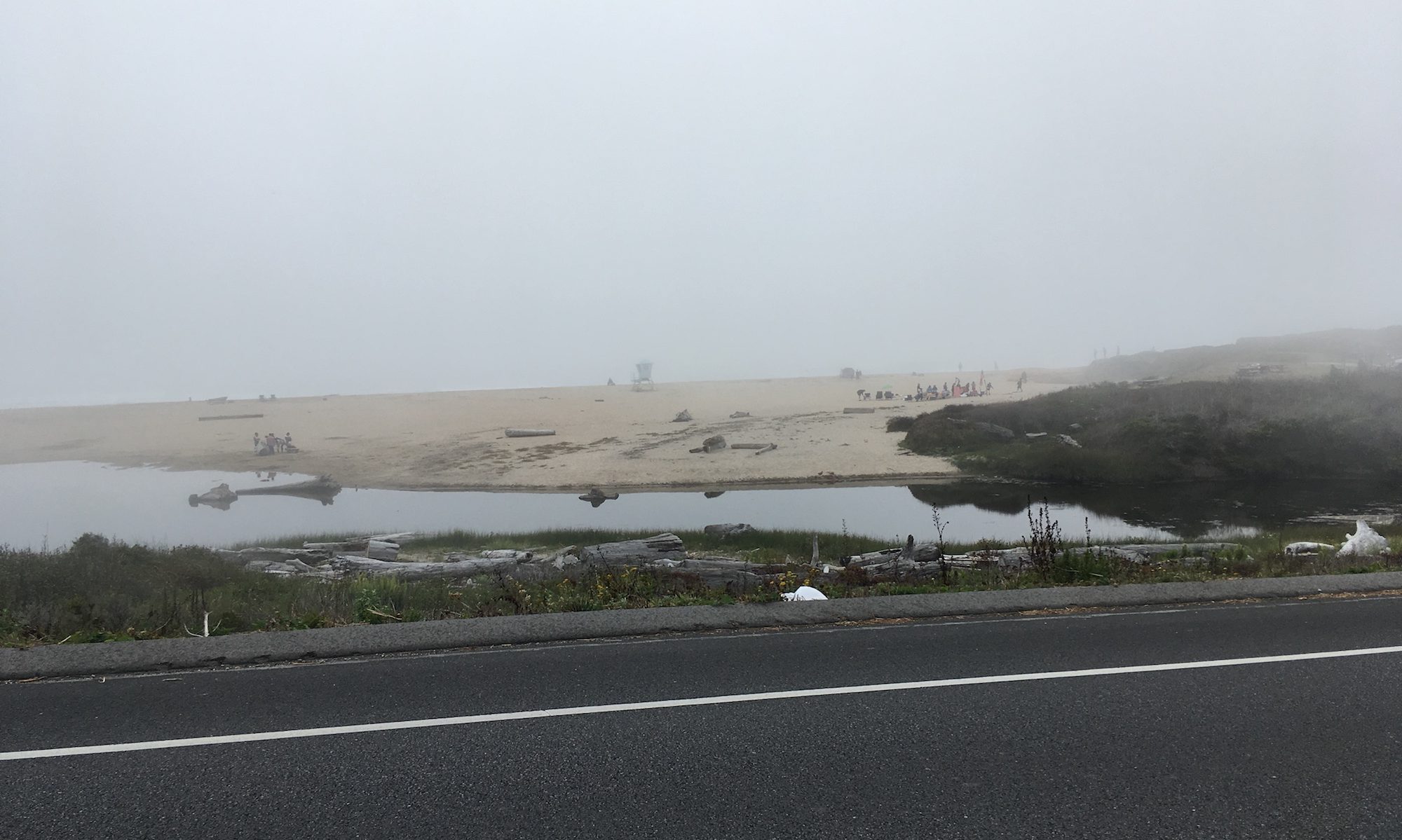
Thanks Dave

Three quarters of my life. 33 years. A world without David Letterman seems almost inconceivable. I mean, I was imitating Paul Shaffer in a Letterman skit in high school in 1988. It’s every bit the same as when Johnny Carson retired – a legend, the sort of late night host that you’re never going to see again. Because let’s be honest, none of the guys out there now, not the Jimmies ( how the hell did we get three guys named Jimmy or James hosting late night shows on three different networks in the same time slot?), not Stephen Colbert, not Conan O’Brien – none of those guys would be there without Letterman. and none of them can remotely do what he did.

It really does seem like now everything is geared toward the YouTube clip, waiting for things to go viral the next morning. Nobody sits down and interviews, everything is geared towards what’s going to look splashing and funny, and it’s not the sort of setting for you to get the Indy 500 winner or the heavyweight boxing champion or hell, even some kid who won a 4-H ribbon at the Indiana State Fair. It’s basically celebrity goof off night, well God knows he did all the goofing off in the world, Letterman was real. He had that look that said ” look, you know and I know that this is bullshit” for all the celebrities and Hollywood riff raff. And then, when he would introduce his heart surgeons, or give that amazing monologue in the first show back after the September 11th attacks, it felt like something only he could do. Jay Leno couldn’t give that speech. Jimmy Fallon couldn’t give that speech. I can’t think of a single currently employed talk show host on late night who could.

It’s another memento mori – enjoy the things you enjoy it while you have them, because tomorrow is not promised to you and neither are they. It was a great ride, Dave. Hope you never have to see the Merritt Parkway again.

Election Night Special

UK elections are always fun to watch for a number of reasons.  For one, you don’t have the holy rollers mucking everything up. For another, it’s a short sprint of a campaign with strict limits on campaign broadcasting so you don’t get hammered with the samn damned ads every commercial break. And really, it’s a different and interesting form of governance that I can watch without that sick feeling in the pit of my stomach, because it’s somebody else’s problem.

And right now, that problem is David Cameron’s. He’s gaining ground. The threat of UKIP appears to have been somewhat overstated, and Labour is crashing hard and fast, and the LibDems are paying the price for having allied with him – but the Scottish National Party, if the polls are to be believed, is about to take every single seat in Scotland bar maybe one. Which means Cameron may yet get to go down in history as the Prime Minister who presided over the dissolution of the United Kingdom.

It’s bad for everyone, really.  Labour relied so heavily on Scotland for support in recent years that the fallout from its Unionist stand during the referendum has really and truly poisoned the well.  The LibDems enabled a Tory government without getting anything its own way and have been well and soundly thrashed by what should have been their base, and may be on the verge of electoral annihilation. UKIP’s share of the vote is spiking without giving them any actual extra seats. And for all that, the Conservatives may yet fail to book a majority in their own right.

Long story short: this election was a powder keg under the UK political system, and the British people grabbed the plunger and slammed it down with both hands. Now things get interesting.

Final Impressions

So this review of the Apple Watch ends with the reviewer saying that it’s useful for him “to track my fitness and check the time and important notifications from the apps I care about most.” Turns out that’s the exact use case for me and the Pebble. I check the time on it. I have step counting and sleep tracking via Misfit – they don’t really integrate well with Apple Health but I don’t actually use Apple Health, and the Misfit watch app works much better than Morpheuz as a standalone tracker. Notifications to the arm without pulling out the phone are also handy, to the point where I’m actively considering changing my two-factor authentication at work to SMS rather than Duo Mobile because then I’d have two-factor authentication ON MY ARM.

Ultimately, this is where smartwatches will become a thing: you just have to get them into enough people’s hands to figure out what the use case is. Apple threw a bunch of stuff at the wall – things like sending your heartbeat or tiny sketches smacks of Samsung’s feature-itis for its own sake – but their user base is big enough that enough people will roll the dice, and they can iterate from there for the second generation.  As for me, I do have one customization that I wouldn’t have had on an Apple Watch: my primary watch face during the day tells time with Swatch Beats, which is a nice throwback to 1999 and a memento mori of booms past.

$80 to inoculate against a $400 purchase turns out to have been money well spent, even if I do wish I could have copped the gray one instead. But this one also works just as well with the Moto X, which is handy (in fact it works slightly better, as I can pick and choose apps to notify me and reply with emoji to certain forms of messaging…not completely useless, which sounds like damning with faint praise but isn’t).  And in the end…it’s a watch. You don’t stare at a watch for hours on end, you look at it for a specific piece of information (like day or date, for instance). Viewed in that light, the Pebble is about dead solid perfect for what I need, and kind of an inspiring notion: a small company that had an idea and brought it to market without just selling out to Apple or Google or Microsoft, and with crowdfunding no less.  Well done. Would that more of this industry was like that.

Hiroshima

They call it the A-Bomb Dome.  It’s what’s left of the former Industrial Hall, the building closest to the hypocenter of the detonation. It looks pretty much like any other bombed-and-burned building, just brick and steel, scorched and twisted and slightly melted in spots.  The thing is, all around it you have the river and the assorted monuments and memorials and the museum, and beyond that is the rebuilt city.  So when you go into the museum and look at the black-and-white pictures of a giant burnt plain with a few stubs of trees or buildings standing like random scarecrows in winter, it doesn’t seem real.

The aftermath is worse, of course.  The lucky ones got blown to pieces right away; the rest were left with burns and fallout and throwing up internal organs and microcephalic offspring.  All in all, pretty horrifying stuff, especially when you think about how we really didn’t know just how the thing would work out.  After all, there had been exactly one detonation of a test device, and the production design was the Mark 1 that was dropped from the Enola Gay.  They weren’t even sure if the thing would detonate, let alone what would happen.

Was it the right thing to do? We did it again three days later to Nagasaki – and even then, as the emperor was preparing to broadcast his rescript of unconditional surrender, there were officers plotting a palace coup to prevent it so that the army could fight on.  And the US had enough fissionable material for one, maybe two more bombs at most – so what then? Tokyo? Kyushu, to try to pave the way for the invasion forces? Hold it in reserve just in case things really turned ugly?

And then there’s that invasion itself.  Scheduled for November 1, 1945, less than six months after V-E day, the first landing to establish a base for the eventual assault on the Kanto Plain outside Tokyo four months later.  The biggest invasion force in human history, one projected to lead to a million Japanese casualties and more American deaths than the rest of the war put together.  And I think about the fact that today, in 2015, there are American officers in Afghanistan and Iraq with Purple Hearts in their kit bags, ready to award on the spot, because in seventy years we still haven’t awarded all the Purple Heart medals that were manufactured in anticipation of that invasion.

War is hell. We firebombed the very shit out of Dresden and Tokyo. We caused more casualties in Tokyo than in Hiroshima, simply because the city was mostly built out of wood and paper and went up like a torch when General Curtis LeMay switched to incendiary bombing. If everything in Osaka and Yokohama and Tokyo looks like it went up around 1960, well, I have a stunning coincidence to report.  About the only thing we didn’t pound into rubble was Kyoto, simply because some of the higher powers in the US command were unwilling to destroy the historic capital and cultural center of Japan; otherwise it probably would have taken the A-bomb instead of Hiroshima.

In the end, it was probably necessary.  It probably saved close to a million Japanese lives that would have almost certainly been lost in a protracted invasion, especially when middle-schoolers were being handed sharpened screwdrivers and told to aim for an American soldier’s abdomen.  The Marines who’d fought their way through the islands for over three years were counting on another three; the sullen motto was “Golden Gate by ’48.”

But if there’s a lesson here, this is it: you can do the wrong thing for the right reasons, but that doesn’t make it the right thing to do. And if you decide to do it, you’d better be prepared to accept and live with the consequences.

Hi, Fi

Well, here we go.  In my absence, Google announced the launch of Project Fi, their experiment as a mobile virtual network operator.  It more or less dovetails with what the rumor mill predicted: only works on the Nexus 6 with a special SIM that allows multi-network operation and does everything (including phone and text) over Wi-Fi first but can then roam into T-Mobile or Sprint networks, whichever is stronger. Unlimited talk and text, service in 120 countries (with a slight fee for placing voice calls abroad), all for a flat $20 and then $10 per GB of data thereafter, prorated and refunded.  So if you pay $50 but then only use 2.7 GB of data, you’ll get $3 back.  Or if you pay $40 and use 4.2 GB of data, you’ll be charged $62. Simple.

It’s a gauntlet thrown at the feet of AT&T and Verizon, mainly. The old PCS-only carriers don’t generally have the rural buildout to compete outside the city, because they didn’t inherit any of the old 800 Mhz frequencies the original A- and B-band cellular operators had (all of whom effectively were either AT&T or Verizon by 2006).  But with both Sprint and T-Mob to draw on, and wi-fi to backfill, Google might just be able to compete effectively – or at least put severe pricing pressure on the Big Two, which have in the last decade managed to pivot from selling tons of minutes and throwing in data as lagniappe to selling nothing but data and throwing in unlimited calls and texts as the sweetener.

But…

Seriously. Depending on where you live, Google has gotten way beyond the service sector only.  Time was, Google could be your email, your search, your social networking, your navigation, your media provider, and the OS of your phone, laptop and streaming stick.  Now they can be your ISP, your TV provider and your cellular phone company as well.  If you like and if the geography supports it, you can basically exist in a 100% Google ecosystem.

And that’s problematic, as I’ve described here and elsewhere.  It’s the mirror image of Mountain View as Googleburg: when you’re a company town, it generally works out better for the company than the town, and when Google’s not Google anymore where will that leave you? And it’s not like you can avoid them; Android has a market share bumping around 80% worldwide for smartphones and the majority of my personal email correspondents are on Gmail even if I’m not so it’s not like you can swear off the Beast of Mountain View and avoid being under their sway. And having established that “don’t be evil” is a crock of shit, where does that leave you?

I spoke with someone writing an article about the transformation of some of these company towns in Silly Con Valley, and my line on Google was “right now, it’s kind of like Smaug, sitting there on a huge pile of gold, and here we are on the lake hoping against hope it just doesn’t decide to wake up.”  It staggers me that the same people who got sand in their bungholes at the horrifying revelations of Edward Snowden are still blithely indifferent to how much power they hand over to Google, completely voluntarily.  Of which more later.


Japan

First off: set aside the details of the travel qua traveling. Because you should never leave the country with a group of 20 people who are all a decade or more older than you. Old white folks are the worst to see another country with.  Your own culture should be a springboard, not a fortress, and the best part of the trip was when we were on our own (which in fairness did dovetail with the most luxurious accommodations as well).

Now.  Japan.

I suppose the most surprising thing to me was that it didn’t seem all that expensive.  Sure, it was pricey, but so is San Francisco. When you can get a half-liter Coke from a vending machine for the equivalent of $1.43 and a whiskey highball – at LUNCH – for $2.60, that’s downright reasonable.  I’m sure real estate and rent is appalling, but hell, there’s no way our house is worth a million dollars, and yet.

The next most surprising thing, I suppose, is that for all the talk of ubiquitous all-everything Japanese vending machines, I didn’t see anything on offer but cigarettes and non-alcoholic beverages. That said, there were a LOT of drink machines.  I mean, a lot a lot.  As in, you’re walking down a back-alley sort of street and there’s a Suntory vending machine just in the middle of the alley apropos of nothing.  I don’t want to know how much money I sank into vending machines buying Coke Zero, or Coke Life, or Bikkle, or CC Lemon, or any of half a dozen different bottled coffee options with varying sweeteners and temperatures.  That’s right, they’ll sell you a can of hot coffee out of the same machine that sells you a bottle of cold Coke.

And the temptation is there pretty much all the time. The smallest bill is 1000 yen, or ~$8.40 today.  The largest coin is 500 yen, or ~$4.20. Because one yen is less than one cent, you look at ¥130 for a short bottle of Fanta and think “that’s less than a buck thirty” and pour the money right in, and next thing you know you’re spending ten dollars a day just getting drinks at random.  Which is not a problem for me, but it’s the same issue I had in Europe (and especially Britain) – when the base unit of currency is a coin, whether a Euro or a pound or 100 yen, your American brain instinctively devalues it.  It makes me wonder whether you could stimulate the economy just by getting rid of the $1 bill and forcing everyone onto the golden dollar coin, thus getting the push that comes with buying a drink for just two coins. But I digress.

There was a certain frozen-in-time aspect, too. Salarymen are still all off to work in two piece dark suits.  Women are still wearing pantyhose with jeans, never mind dresses. The architecture mostly seems to be Mad Men-era (for reasons that are probably obvious, as is the reason it’s awkward to discuss, especially in/around Hiroshima, of which more later). There are still line items like “drinks for women” in the cocktail menu. It’s as if the Occupation departed and everything more or less froze in place about the time the economy started to skyrocket – and thought “we have a good thing going here, why change?”  And then stuck after the deflation hit and the bubble burst.  You get the sense that daytime TV might have more than a couple ads invoking “ring around the collar” and “occasional irregularity” if you could understand them.

Japan is another train country, like the UK, and it was pretty delightful.  After years and years of public transit, all I really need to know is “do you tag at both ends or just pay on entry and is it a flat rate or not.” Once that was clear, using JR Rail was easy as pie. Even the light rail system in Arashiyama, on the edge of Kyoto, was easy to deal with once you figured out it was “pay as you get off the train if you don’t have a payment card.”  (As an aside, you could easily wind up in a Charlie On The MTA situation if you don’t watch yourself. Through the open window she gives Charlie the finger as the train comes rumblin’ through…)  And the existence of viable bullet trains…honestly, it’s a disgrace we let the rest of the world steal a march on us there.  I don’t know how we wound up bifurcating into cars and planes and ignoring rail transit outside the Northeast when a bullet train from SF to LA should have been done by 1990 at the latest.

Japan is also a very lawful country, in the D&D sense.  You expect that, obviously, but it’s still impressive to see people getting off the train before anyone tries to get on, and people being ready to board quickly, and being able to run trains with one minute headway because you can swap out passengers in 20 seconds.  Nobody was talking on the phone except tourists. Nobody was crossing against the light. Too many people around NorCal act as if it’s a straight jump from enforcing “no skateboarding on the platform” to concentration camps.  Japanese commuters know damn well there are other people, and it shows.

But back to the frozen-in-time thing, which strikes me as important. Japan was still in the throes of a deflationary spiral at the turn of the century when China was granted MFN status.  It seems like that was a critical jump, because most of the stuff that was made in Japan now gets made in one Special Economic Zone or another in China. Televisions, computer components, everything that Americans freaked out about in the 1980s; I wouldn’t be surprised if a lot of Japanese people were similarly freaking these days.  I saw an awful lot of “Made In Japan” signs on goods for sale, and it says something about how much things have changed that they feel the need to make it a selling point.

In any event, I’m sure I will have much more to say later as I process the whole trip.  I would go again in a heartbeat.  Probably not on a tour, though.  We broke the seal, we know where to go and what to see, and I think we’d be just fine, especially if I learned more than three phrases in Japanese…

Cherry Blossom Time

And just like that, after years of agonizing and seven months of not-really-planning and a couple weeks of dithering, it’s time to go to Japan. There will be updates and a travelogue eventually, but for the most part, it’s going to be us and a couple of iPhones and a country that for most of my life was shorthand for “the future”. Bullet trains and high tech and 24-hour Blade Runner neon.  And then they too got overtaken by events.

It’ll be worth it, if nothing else for two weeks away from work and time to enjoy some downtime and check another country and continent off the list.

Second impressions

It’s handy to have every notification coming right to your arm.  It’s less handy when you seem to be dropping the connection. I’ve been having weird Bluetooth problems with my headphones, my Pebble and my iPhone 6 for the better part of a week, and I’m wondering how well they will all play together.  I’m also having trouble getting the sleep data out of Morpheuz into the Health app, and it’s annoying me.

Basically I’m starting to see the appeal of the single-platform integration, which is of course what Apple does better than anyone else.  If you need to run a watch with your iPhone, use the Apple Watch and the results will be seamless assuming you are slightly brighter than a turnip.  This is not a sure thing.  The problem with making a computer anyone can use is that anyone will.

Nevertheless, I don’t mind it.  It’s handy enough when I can make it work, and I’m sure some of this is just the teething pains of a new device in my rotation. That said, it’s not coming to Japan. Mainly because I don’t want one more thing to charge, and also because it won’t really be necessary.  The watch hasn’t replaced the phone for alarm clock purposes, and I won’t need instant notifications for things while abroad (not least because I won’t actually be on a cellular network, just a handheld WiFi device feeding Internet access to my phone).  I’ll stick to my mechanical watch when I’m out of the country.  

As for the phone, I’m taking just the iPhone 6.  No iPad, no Moto X – I know the X was meant to be the travel phone, but given that it’s much simpler to have a WiFi device in Japan than to battle through the trouble of getting a SIM card and activating it and having data only and…the juice just ain’t worth the squeeze. And the only thing I need from the iPad is easier reading or movie watching (neither of which I should need while I’m in, you know, ANOTHER COUNTRY) or maybe better access to websites or blogging (which isn’t enough to make it worthwhile). And the iPhone 6 will go in my pocket and has better battery life than the Moto – because Lollipop still hasn’t shipped for the 2013 Moto X, which is further proof that you should never buy Android unless you know you can live with the version of the OS that ships on it.  I’ve gotten from 4.2.2 to 4.4.4, and despite Moto’s assurances, I’m not holding my breath for 5.

So that’s it.  Analog watch, corded headphones, and iPhone 6. Last time I went abroad was with an iPhone 3G. Times have changed.  Hopefully this will work out slightly better.

What you hear is not a test…

It kind of is though. This is me testing how tough it is to blog from just the iPhone with the damn battery case on it. More and more I think it’s going to require some other tool to successfully blog this trip to Japan. 

And I’m going to have to make written notes. Now is the time when the tactical analysis kicks in – what do we actually need day to day? Given my record, the vitamin C and zinc need to start today. And I should start setting stuff aside for the suitcase or the carry-on tonight. First time out of the country in five years. And I won’t have cellular or the ability to understand the language At All. This will be interesting.