“…. i was misinformed”

I started this blog at a high point of my life, even if I didn’t know it at the time. It was September, college football was just starting again, Cal was riding high and Vanderbilt was showing signs of life (and I had decided to go all-in on them). I was working at Apple, in an office with a couch in it and a door that closed, and my boss thought I was doing a whale of a job. I had a company Amex, I was trusted to do work in Chicago or at MacWorld, and I was collecting employee stock purchases and using the new black MacBook as my daily driver. My surrogate sister had moved in with us, though I didn’t realize at the time who she was, and we could routinely smoke cigars shipped from Washington DC where my old gang was still mostly assembled at National Geographic. My in-laws were still alive, my Alabama relations hadn’t gone seven bubbles off plumb, and the bloom was squarely off the George W. Bush rose and a Democratic ascendancy seemed imminent. Social media meant Vox, the replacement for LiveJournal. My knee was tweaking out but not enough for surgery, my brain was occasionally wonky but not enough for drugs, my wife and I had our home and were just starting to get ahead of the mortgage payments, and my new car was almost ready to replace the Saturn with two hundred thousand miles on it. Honestly, at that point, the biggest problem in my life was that work wouldn’t provide data service for my cell phone.

Then, as we say, time happened.

Deconstructing the last twenty years is a tall order. There were waves of depression in 2007-08 that led to my leaving Apple, out of fear that I was falling behind career-wise and losing pace technically, and again in 2010-11 as a result of my Alabama relations acting an ass more than usual. And then there was a run of three bad years at work that overlapped with 2014, the year that we all realized something was wrong and we might not be in for a happy ending, and then GamerGate became everything and time became “well at least.” At least I’m not doing field support any longer. At least Trump doesn’t have control of Congress any longer. At least I still have a job. At least I can work from home during the pandemic. At least Biden won the election. At least my mother-in-law will get some time to live her life without having to worry about my father-in-law. At least Trump’s going to jail. At least we can still afford the mortgage on this house. At least…

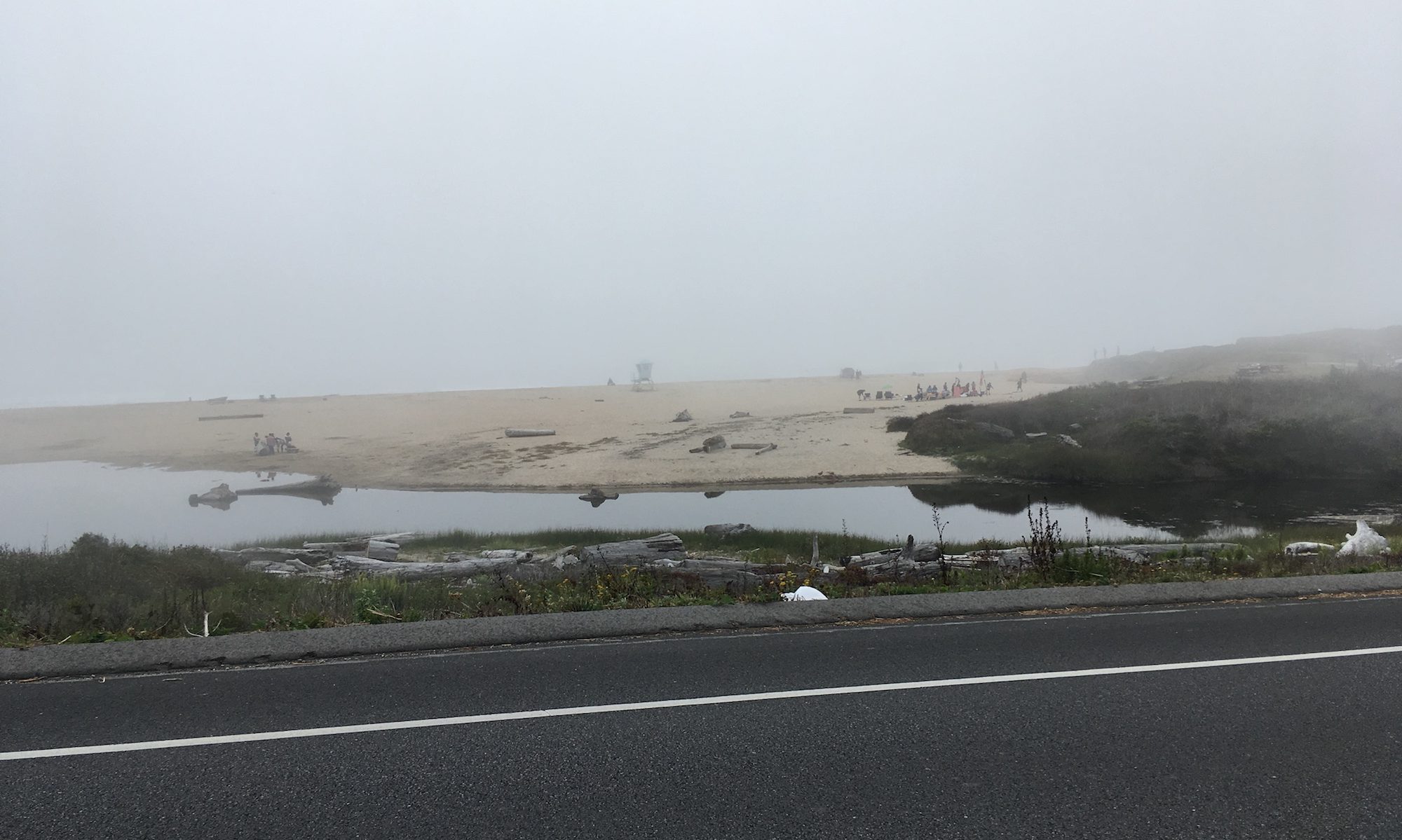
The story of the last twenty years is the struggle to hang onto what I have. To give up on the things that can’t happen, to seek solace and comfort and meaning in the things that can be kept and sustained. Being able to avoid getting out of bed as long as possible on weekends. Being able to retreat to the shed for four or five hours on Sunday night under string lights and a cloudy sky. Watching old Ken Burns series on PBS, keeping up with Star Wars or Marvel stuff on Disney+, being able to take a day off to drive over the hill to experience a day under the marine layer in Pescadero or Half Moon Bay. The quiet background rhythms of baseball, or British soccer. The opportunity to have people come over and hang out in the back yard. And even those mainly depend on being able to keep this house, this yard, this shed. If we can’t keep the jobs we have for at least ten more years, things will get very complicated very quickly.

There’s been a round of layoffs at the end of August at work, this year and last. It almost feels like it’s going to be the annual Hunger Games, only you don’t know who’s playing and there’s absolutely no connection between what you do and whether you’ll go. Incompetent people, malcontented people, absolute brown-nose party-line people, it doesn’t make much difference – except if they’ve been looking for a chance to get rid of you, you’ll catch a stray irrespective of whether you were germane to the ostensible purpose of the layoffs. It’s hard enough to think of starting over somewhere else, no matter how pleasant the prospect of not being there any more – but the fact is, no place is looking for a 54 year old Apple specialist who can’t keep his mouth shut, certainly not at my current level of pay in this economy. And then, see above. What I have built around me suddenly becomes very tenuous.

And yet, occasionally you’ll get something good. When I started this blog, I certainly didn’t expect Vanderbilt to beat Tennessee six more times in the ensuing 20 years, or a Vanderbilt QB to finish second for the Heisman, or to win ten games and become the darlings of the college football hipster world. I didn’t expect that the comic books of my childhood would get turned into a cinematic universe that would conquer the world. I certainly didn’t expect three more Star Wars movies, let alone six, or multiple live action series and entirely new takes on the world of my childhood imagination. I absolutely had no idea that I would own this many lightsabers, or that baseball would take pride of place as my favorite sport (or that Vanderbilt would win two national championships in it). I had no notion that Birmingham-Southern would cease to exist, giving me some measure of closure on my college fiasco, or that the city of Birminigham would become a place I took pride in, actively wanted to visit and spend time in. I certainly didn’t think I would ever eschew going down the pub in favor of relaxing with a moon-dust indigo Yeti full of craft beer and a book about the history of early Christianity. (Although if you’d told me I would finally come out to myself as an Episcopalian, I wouldn’t be surprised, just quietly pleased.)

Live in the moment. Want what you’ve got. Be open to unexpected delight. At least somewhere in the last twenty years, I did a smidge of growing up.

saint dolly of sevier, pray for us

My mother saw her whole career.

She saw the woman who was a global icon. She saw the woman who brought Nashville to Hollywood. She saw Porter Waggoner’s girl singer become too big for his vision, too big for his show, too big to ever again be constrained. But she also saw a ten year old mountain girl on the Cas Walker show in Knoxville on KBIR, making her television debut in 1956. And she has never not been proud of another East Tennessee hillbilly girl who came to bigger things.

Of course, it’s been a long time since Dolly had one of those hits take over the chart (though I’m sure Spotify and Apple Music’s data centers that handle the PA- section of artists are about to burn to the ground), but she didn’t have to. She had done her music her way, charted her own course to the mainstream, become an icon of second-wave feminism on the silver screen and carved her own face on the Mount Rushmore of Nashville’s greatest songwriters – easily the equal of Tom T, or Hank, or Kris, or the Bryants, or Willie, or… and beyond that, she had parlayed her wealth into an even greater fortune – enough to just do whatever she wanted.

And what she wanted to do was…whatever she wanted. She put a theme park in East Tennessee, she took her royalties from Whitney’s cover of “I Will Always Love You” and turned it into support for Nashville’s Black community, she launched her own basic income program for forest fire victims, she quietly invested in and became an uncredited co-producer of Buffy the Vampire Slayer, she sent out a third of a BILLION books to kids between the ages of 0 and 5 so they could learn to read as her father never did. She amassed an engine of tremendous fortune and then spent her life emptying the money cannon at the deserving. You can hardly throw a rock in Tennessee without hitting a majority-Black school whose band uniforms or choir robes hadn’t been paid for, on the low, straight cash, by the little old white girl from Sevier County High.

And of course, there’s the million dollars she gave to a research team at Vanderbilt University, desperate to know what she could do to help, and her funding spearheaded Vanderbilt’s contribution to what became the Moderna virus. A million Americans were killed by COVID, which people have already forgotten, and the reason it’s treatable and less lethal and people mostly don’t get it and survive if they do, five years later, is in part because of the girl from Pittman Center. She underwrote a miracle.

We all loved Dolly, and I don’t say that idly; the response on Blacksky has been a plaintive a “NOOOOOOO” as anywhere else, it’s the first item on the world news in Ireland and London, the most hated man in the word actually gave an appropriate response, she was the least probematic white woman alive in the 21st Century. The queen of Appalachia, the willing icon of drag queens the world around, the one single musical artist that literally everyone I’ve ever known would ride for. In the end, I think we loved her because she was what we wished everyone was: solemn but sassy, talented but humble, self-depricating and silly yet fully aware of her worth and her truth, tremendously kind and surpassingly generous, always ready to bless your heart and hug your neck with empathy and sincerity. The website for her Imagination Library is crashing constantly tonight as people pay tribute by pairing their generosity with hers, because Dolly was someone who made you want to be a better person in the ways she was.

A person of divine gifts, who used them to make the world a better place, and was an exemplar of what the Bible demanded of us all: kindness, justice, walk humbly with your God. I know it will be 2076 before it could even be considered, but if we start venerating now, it’ll make the case easier for our grandchildren.

“O God, whose mercies cannot be numbered: Accept our prayers on behalf of thy servant Dolly Rebecca Parton, and grant her an entrance into the land of light and joy, in the fellowship of thy saints; through Jesus Christ thy Son our Lord, who liveth and reigneth with thee and the Holy Spirit, one God. Amen.”

– Conrad Elliot

go on, take the money and run

“And for an instant, she stared directly into those soft blue eyes and knew, with an instinctive mammalian certainty, that the exceedingly rich were no longer even remotely human.”

-William Gibson, Count Zero


My favorite author was on top of it forty years ago. He’s not the least bit wrong, either. If you look at the venture capitalists of Silly Con Valley over the last twenty years, the transformation is insane. I don’t think it’s an accident that at the core of the cohort are a bunch of white Africans who came through Stanford in the 1980s and 90s: the mental orientation is “entitled colonizer”: we are here to bring the light of our civilzation to you benighted abroginals, and your only appropriate response is subservient gratitude. From Peter Thel’s armada of Stanfurd undergrad blood boys, to Y Combinator as the new credential, to the “old dude hanging around the high school” vibe that Theo Baker’s outstanding book skewers in “How To Rule The World”, to the arrogance and inevitablity of “A.I.” and the demand that “it will” be treated as the equivalent of “it already can” – these are people who have enough money to foist their worldview on a world that has little opportunity to push back. There is an assumption that they are entitled to purchase their own government, coin their own money, carve out their own cities or states (Tim Draper will not be happy until California is in pieces and one of them is an autunomous 415/650) – that the world is obliged to conform to their demands.

And they can get away with it, because they have money. Lots and lots of money. Mostly through the circular dealing of passing it among themselves, investing in one another’s projects at grotesquely inflated valuations that then make their own holdings worth even more. Phony Stark himself made most of his money on government subsidies, used it to buy himself Twitter at an excessive price, and then have Twitter acquired by SpaceX to give himself another source of phony money with a government backstop. If it weren’t for Uncle Sucker, Elon Musk would be the most obnoxious has-been around the braai in Jo’Burg. As it is, he’s the bankroll of white supremacy around the world. It’s not a coincidence that white South Africans and Indian Brahmins are overrepresented in the VC class, because the superiority oozes out of them all.

It wasn’t meant to be like this. We were supposed to be working twenty-hour weeks by now. We certainly weren’t meant to be working twelve hour days six days a week, like the VC masters demand is necessary to stay ahead of “the Chinese menace”. Instead, the productivity gains of the last forty years have flowed uphill, and Ed Earl Brown is doing about like he did when he entered the workforce. Old-timers grouse that a homeless guy has a cellphone, when that phone’s service costs 20% of what a landline used to, or that their blue-haired grandkids have a 65” television when it costs a fraction in real dollars of what that wooden console set cost in 1984. Meanwhile, college tuition that once could be paid with minimum wage for 20 hours a week now means starting work with $100,000 in debt – but if you don’t take on the burden, you’re not allowed to have a job that offers you the carrot of eventually paying it off. Meanwhile, we’re being told that AI will replace everything except the most senior people – when the truth of the matter is, your garden-variety CxO could be replaced by AI much quicker than your typical junior developer. And the COVID-19 pandemic showed us who the essential workers really are – for the most part, they’re the people with their name on the front of their shirts. AI isn’t going to repair your toilet on Christmas Eve, or change the oil in your hypercar, or actually flip the burgers on the griddle. But the Eloi are convinced that they can abstract the Morlocks away, that the actual labor that makes things possible is fully fungible – as the word goes, unskilled.

The problem is, that kind of money buys you freedom from consequences. If your new company turns out to be shit, so what? Someone else will pick up the pieces, you just lost a bunch of funny money, you have plenty more. The investors who bankrolled you can spare the cash. Or maybe they can’t, but that’s their lookout. We have a class of people with wealth and power who have no fear of God, of the guillotine, of confiscatory top marginal rates, that someday the remaining 99% will realize that the 1% have all the stuff, and if they ever want any stuff, they have to take it from the 1%. And we owe it to that 1% to protect them from themselves. And the easiest way to do that will simply be to say that we’re taxing wealth, and as soon as you’re a billionaire, we’re going to take everything over a billion. Everything. If you don’t want to lose it, better start giving it away quick. In the golden age of the 1950s that the white supremacists want to return to, 1/3 of workers were in a union and the top marginal rate was 91%. Bet. If you want to bring back the old days, we aren’t starting with segregation or male chauvanism, we’re starting with that.

It’s past time to make being a billionaire a capital crime. If you want to live, you can’t take it with you. 

on the phone

Almost two years in, I’ve made my peace with the six inch phone. The iPhone 16 Pro will get most of the good Apple Intelligence stuff in iOS 27, I like having the telephoto camera, the battery life is still mostly manageable, and most importantly, it serves just fine as The One Device. My iPad mini is mostly for Sunday nights in the shed now, to be used for music and radio streaming, and while the iPhone 13 mini is still dearly missed – and has a special case on it so I can plug it into USB-C instead – the fact of the matter is that the rest of the world has long since moved on to Big Phone and there’s nothing to be done about it. 

As I approach the two decade mark on this blog, I am struck by how much of that time has been the chase for the One True Thing – the quest to stop having three or four of everything that each do 80% of what I want and have the one thing that does 100%. With the phone, it finally settled on the iPhone 16 Pro. With the pen, it finally settled on the Machine Era brass field pen, retrofitted with a navy-ink Pilot G2 refill. With the watch…well, you can’t expect an Apple Watch to last forever, but the Ultra 2 that I got almost three years ago performs like a champ with no signs of stopping or losing support. I haven’t been able to pare down the raft of blazers, but if I’m not trying to nice it up, my gray American Giant chore coat and the black fleece that goes under it can be mixed and matched for 90% of my workaday outerwear needs (if only I needed outerwear more than four months a year!) and after years of being all over the place, I mostly use only two Yeti tumblers any longer: a 16 oz at work and the Moon Dust 20 oz at home, where the textured handfeel is a reminder that I’m not at work and can unclench for a bit.

It’s remarkable the difference metal makes. Won’t shatter if you drop it, won’t leach microplastics into your testicles, and that 20 oz size is perfect for morning coffee, evening pints, or refilling with Coke Zero from one of the 3/$5 bottles on sale at Safeway right now. The metal watch feels better on my arm. The metal pen is a comforting weight in the hand. Even the Swiss Army tool, souvenir of Switzerland even though I didn’t buy it from there, is gold-toned Alox and has only the three things I ever really need: bottle opener, scissors and box ripper. And when one of the metal lightsabers goes on my belt, for whatever reason, it’s hanging from a simple piece of aluminum that slides over the belt and holds a Covertec wheel in place. 

It was probably fifteen years or so ago, after reading William Gibson’s Zero History, that I became fixated on the idea of having things that last. In the case of the mechanical watch and the Machine Era pen, the originals would still be doing fine if I hadn’t lost them through neglect and inattention. (For that matter, so would the first Moon Dust Yeti.) It drives home the point that even when you defeat planned obsolescence, you have to take care of your stuff and be mindful of it and not lose track of it, like the perfect blue Uniqlo casual blazer that I paid $30 for in NYC in 2012 and have since bought half a dozen other blazers trying to replace. I know I probably can’t buy the one phone for the rest of my life, but it would sure be nice to try.

And when you’re done spending money on stuff, you can put it into experiences, whether that means a plane to Kenya or a jug of a new cask mild or a new book of history. Or at the very least, if things start to go south, you already have all the things you need to get by. Of which…